
Fibroid Treatment in Kochi
When Fibroids Start Affecting Your Everyday Life
Expert fibroid care tailored to your symptoms, fertility goals and condition, with advanced laparoscopic surgery when needed.
Expert fibroid care tailored to your symptoms, fertility goals and condition, with advanced laparoscopic surgery when needed.
Uterine fibroids are non-cancerous growths that develop in or around the muscle of the uterus. Some women have no symptoms, while others experience heavy menstrual bleeding, prolonged periods, pelvic pressure, pain, frequent urination or fertility concerns. The location, number and size of fibroids can make a significant difference to the symptoms they cause.
Treatment is not automatically necessary just because a fibroid has been found. Depending on your symptoms, age, fibroid characteristics and pregnancy plans, your doctor may recommend observation, medication or surgery. When surgery is needed, the approach may include myomectomy or hysterectomy, with laparoscopic or other minimally invasive techniques considered in suitable cases.
Finding out that you have a fibroid can raise a lot of questions.
The answer is different for every woman.
Uterine fibroids, also called leiomyomas or myomas, are common non-cancerous growths that develop from the muscle of the uterus. They can occur as a single fibroid or several fibroids and can vary considerably in size and location.
Some women never experience symptoms and may not need treatment. Others may have heavy or prolonged menstrual bleeding, pelvic pressure, pain, urinary symptoms or fertility problems.
The important thing is not simply finding a fibroid on a scan. It is understanding where it is, how it is affecting you and whether it needs treatment.
Fibroids are growths that develop from the muscular wall of the uterus.
They can be located in different parts of the uterus, and their location can affect the symptoms they cause.
The main types include:
These grow towards the inside of the uterine cavity.
Even a relatively small submucosal fibroid can sometimes cause heavy menstrual bleeding or affect the uterine cavity.
These develop within the muscular wall of the uterus.
They are one of the more common types of fibroids and can vary widely in size.
These grow towards the outside of the uterus.
Depending on their size and location, they may cause pressure on nearby organs rather than primarily affecting menstrual bleeding.
Some women have more than one type at the same time.
Fibroids do not always cause symptoms.
When they do, the symptoms can include:
The severity of symptoms does not always match the size of the fibroid.
A smaller fibroid positioned inside the uterine cavity can cause significant bleeding, while a larger fibroid in another location may cause relatively few symptoms.
That is why the location of the fibroid matters as much as the measurement on the scan.
A fibroid does not necessarily need treatment just because it appears on an ultrasound.
You should consider a consultation if your symptoms are affecting your quality of life or if you have concerns about fertility.
It is particularly worth getting assessed if you have:
If you already have an ultrasound or MRI report, bring it to your consultation so the fibroid's size and location can be reviewed in context.
Yes.
Fibroids, particularly those that affect the uterine cavity, can contribute to heavy or prolonged menstrual bleeding.
Heavy bleeding can eventually lead to iron-deficiency anaemia, which may cause tiredness, weakness, breathlessness or reduced exercise tolerance.
If your periods are consistently heavy, it is worth discussing both the bleeding and the underlying cause.
Simply taking iron supplements may correct the anaemia temporarily, but if a fibroid is responsible for ongoing heavy bleeding, the underlying problem may also need to be addressed.
They can.
Fibroid-related discomfort can feel different from one woman to another.
Some women describe:
Large fibroids may also press against surrounding organs.
However, not every pelvic pain is caused by fibroids.
Endometriosis, adenomyosis, ovarian conditions and other gynaecological problems can cause similar symptoms.
This is why the scan findings should be considered alongside your symptoms rather than assuming that every symptom is caused by the fibroid.
Sometimes.
Many women with fibroids become pregnant without difficulty. But certain fibroids, particularly those that distort the uterine cavity, may affect fertility or pregnancy.
The impact depends on factors such as:
If you are trying to conceive, the presence of a fibroid does not automatically mean that surgery is needed.
Your age, ovarian reserve, fertility history, fallopian tubes, partner factors and other findings may also matter.
A fertility-focused evaluation can help determine whether the fibroid is actually contributing to difficulty conceiving.
Yes. Many women with fibroids have successful pregnancies.
However, some fibroids can affect pregnancy depending on their size and location.
Fibroids may sometimes contribute to:
If you are planning pregnancy and have been diagnosed with fibroids, it is useful to discuss whether the fibroid needs to be treated before trying to conceive.
The answer depends on your individual situation.
A pelvic ultrasound is commonly used to identify fibroids and assess their size and location.
Depending on the findings and your symptoms, your doctor may recommend additional imaging.
An MRI can provide a more detailed view of the uterus and may be useful when there are multiple fibroids, large fibroids, unusual locations or when detailed surgical planning is required.
In some situations, hysteroscopy may be recommended to examine the inside of the uterine cavity, particularly when a submucosal fibroid is suspected.
The choice of investigation depends on the clinical question.
No.
If a fibroid is not causing symptoms and there are no other concerns, your doctor may recommend observation and follow-up rather than immediate treatment.
Treatment becomes more relevant when fibroids cause problems such as:
Your age and pregnancy plans can also influence the decision.
A woman who is close to menopause may have a different treatment discussion from a woman who is actively trying to conceive.
Treatment depends on the individual case.
Options can include:
Some fibroids can simply be monitored, particularly when they are not causing significant symptoms.
Medication may help manage symptoms such as heavy menstrual bleeding or pain. It does not necessarily remove the fibroid itself.
Fibroids that project into the uterine cavity may sometimes be treated through hysteroscopy.
A hysteroscopic myomectomy allows the surgeon to remove a suitable fibroid through the vagina and cervix without an abdominal incision.
A myomectomy removes fibroids while leaving the uterus in place.
It may be considered when preserving the uterus is important, including for women who wish to become pregnant in the future.
A hysterectomy removes the uterus.
It may be considered when fibroids are causing significant symptoms and the woman does not wish to preserve fertility, particularly when other treatments are unsuitable or have not provided adequate relief.
The choice should be based on your symptoms, age, fertility plans, fibroid characteristics and overall health.
A myomectomy is surgery to remove fibroids while preserving the uterus.
For women who want to retain their uterus, this can be an important treatment option.
The route of surgery depends on the fibroid.
A myomectomy may be performed:
The size, number and location of fibroids influence which approach is appropriate.
For example, a fibroid projecting into the uterine cavity may be suitable for hysteroscopic removal, while multiple or very large fibroids may require a different surgical approach.
In selected patients, yes.
Laparoscopic myomectomy uses small abdominal incisions and specialised instruments to remove fibroids while preserving the uterus.
The approach may offer advantages such as smaller incisions and potentially a shorter recovery compared with open surgery in appropriate cases.
However, laparoscopic surgery is not suitable for every fibroid.
The size, number and location of fibroids, previous surgeries and the surgeon's assessment all influence whether minimally invasive surgery is appropriate.
Dr. Priya Bhati's official Amrita profile lists laparoscopic gynaecological surgery and complex benign gynaecological surgeries among her areas of expertise.
Hysteroscopic myomectomy is a minimally invasive procedure used for suitable fibroids that grow into the uterine cavity.
The surgeon passes a hysteroscope through the vagina and cervix to reach the inside of the uterus. The fibroid can then be removed without making an abdominal incision.
This approach can be particularly useful for appropriately located submucosal fibroids.
Not every fibroid can be removed hysteroscopically. The size, depth and position of the fibroid within the uterine wall matter.
Hysterectomy means removal of the uterus.
It is a definitive treatment for fibroids because the fibroids cannot return once the uterus has been removed.
However, it also means that pregnancy is no longer possible.
Hysterectomy may be considered when:
There are different surgical approaches to hysterectomy, and the appropriate route depends on the size of the uterus, fibroids, previous surgeries and other clinical factors.
A hysterectomy should therefore be discussed carefully rather than treated as the automatic solution for fibroids.
Not necessarily.
If you have fibroids and are trying to conceive, the first question should be whether the fibroid is actually affecting fertility.
Fibroids that distort the uterine cavity may be more relevant than fibroids that do not affect the cavity.
Your doctor may consider:
If surgery is recommended, the aim is to treat the fibroid while preserving the uterus and, where possible, maintaining reproductive potential.
The procedure depends on the type of surgery.
During a myomectomy, the surgeon identifies and removes the fibroid while leaving the uterus in place.
In laparoscopic surgery, small abdominal incisions are used.
In hysteroscopic surgery, the fibroid is approached through the uterine cavity.
For larger or more complex fibroids, open surgery may sometimes be necessary.
Before surgery, your doctor will explain the planned approach, expected recovery and possible risks.
Like any surgical procedure, fibroid surgery carries potential risks.
These can include:
With myomectomy, the possibility of significant bleeding is an important consideration, particularly when fibroids are large or numerous.
The specific risks depend on the type and complexity of the operation.
Your surgeon should discuss these risks with you before you decide on surgery.
Yes.
A myomectomy removes the fibroids that are present at the time of surgery, but it does not prevent new fibroids from developing in the future.
This is different from hysterectomy, after which uterine fibroids cannot recur because the uterus has been removed.
For women who want to preserve fertility, however, myomectomy may offer an important way to treat symptomatic fibroids while retaining the uterus.
The decision should take into account both your current symptoms and your future plans.
Recovery depends on the type of surgery.
Hysteroscopic surgery generally involves a different recovery period from laparoscopic or open myomectomy.
After laparoscopic surgery, many women can return to normal activities sooner than after open abdominal surgery, although recovery varies from patient to patient.
After surgery, your doctor will advise you about:
If you are planning pregnancy after a myomectomy, ask your surgeon when it is appropriate to start trying.
Fibroids are influenced by hormones and often shrink after menopause.
However, a postmenopausal woman with a new or enlarging uterine mass should still be properly evaluated.
Do not assume that every uterine growth after menopause is simply a fibroid.
Your doctor may recommend imaging or other assessment based on the symptoms and findings.
Most uterine fibroids are benign.
A fibroid itself is not considered a precursor to uterine cancer.
However, a rapidly growing uterine mass or unusual postmenopausal finding should be assessed rather than automatically assumed to be a routine fibroid.
If your scan or symptoms raise concerns, your doctor can recommend the appropriate evaluation.
Fibroid surgery can look straightforward from the outside, but the operation can become more complex when fibroids are large, numerous or located close to important structures.
Surgical planning also changes when fertility preservation is important.
The objective may not simply be to remove the fibroid. The surgeon may also need to consider the uterine wall, future pregnancy, blood loss and the best route of surgery.
Dr. Priya Bhati's official profile lists complex benign gynaecological surgeries, laparoscopic gynaecological surgery and robotic-assisted benign gynaecological surgery among her areas of expertise.
Amrita Hospital's gynaecologic oncology programme also provides conventional, laparoscopic and robotic-assisted surgery for complex benign gynaecological conditions.
If your scan has shown one or more fibroids, the next step is not always surgery.
The important questions are:
Dr. Priya Bhati can assess your symptoms and imaging and discuss whether observation, medical treatment or surgery may be appropriate.
For women who require surgery, the approach can be selected based on the size and location of the fibroids, the number of fibroids and your individual goals.
Consider a specialist consultation if you have:
If you already have an ultrasound or MRI, bring the report and images to your appointment.
A fibroid does not automatically mean you need an operation.
The right decision depends on your symptoms, the fibroid itself and what matters to you, especially if you want to become pregnant in the future.
Dr. Priya Bhati provides specialist evaluation and surgical care for fibroids and other complex benign gynaecological conditions in Kochi.
Discuss your symptoms, scan findings and treatment options with Dr. Priya Bhati.
Book a Consultation
1. What is a uterine fibroid?
A uterine fibroid is a non-cancerous growth that develops from the muscular tissue of the uterus. Fibroids can vary in size, number and location.
2. What are the symptoms of fibroids?
Fibroids may cause heavy or prolonged periods, pelvic pressure, abdominal discomfort, pain, frequent urination or fertility problems. Some women have no symptoms at all.
3. Do all fibroids need treatment?
No. Fibroids that are not causing symptoms may simply be monitored. Treatment depends on your symptoms, fibroid characteristics, age and reproductive plans.
4. Can fibroids cause heavy periods?
Yes. Fibroids, particularly those affecting the uterine cavity, can contribute to heavy or prolonged menstrual bleeding.
5. Can fibroids cause infertility?
Certain fibroids may affect fertility, particularly when they distort the uterine cavity. However, many women with fibroids become pregnant without treatment.
6. Can I get pregnant if I have fibroids?
Yes. Many women with fibroids have successful pregnancies. Whether a fibroid needs treatment before pregnancy depends on its size, location and effect on the uterus, along with other fertility factors.
7. What is a myomectomy?
Myomectomy is surgery to remove fibroids while preserving the uterus. It may be considered for women who want to retain their uterus, including those who may wish to become pregnant.
8. Can fibroids be removed laparoscopically?
Selected fibroids can be removed using laparoscopic surgery. The decision depends on their size, number, location and other factors.
9. What is hysteroscopic myomectomy?
Hysteroscopic myomectomy removes suitable fibroids that project into the uterine cavity using a hysteroscope passed through the vagina and cervix.
10. When is hysterectomy recommended for fibroids?
Hysterectomy may be considered for women with significant symptoms who do not wish to preserve fertility, particularly when fibroids are large, numerous or difficult to treat through other approaches.
11. Can fibroids come back after myomectomy?
Yes. Myomectomy removes existing fibroids but does not prevent new fibroids from developing later.
12. Can medication shrink fibroids?
Some medicines can control symptoms and certain treatments may temporarily reduce fibroid size. Medication does not provide the same definitive removal of fibroids as surgery.
13. Can fibroids disappear on their own?
Fibroids may shrink naturally, particularly around and after menopause, but this does not happen in every woman.
14. Can a fibroid become cancer?
Most fibroids are benign. A fibroid itself is not considered a precursor to uterine cancer. However, an unusual or enlarging uterine mass should be properly assessed.
15. How are fibroids diagnosed?
Ultrasound is commonly used to identify fibroids. MRI or other investigations may be recommended when more detailed information is needed for diagnosis or surgical planning.
16. What type of fibroid causes the most bleeding?
Fibroids that grow into or distort the uterine cavity, particularly submucosal fibroids, can be associated with heavy menstrual bleeding.
17. How long does fibroid surgery take?
The duration depends on the number, size and location of the fibroids and the type of surgery being performed. Your surgeon can provide a more specific estimate after reviewing your scans.
18. How long does it take to recover after fibroid surgery?
Recovery depends on whether the surgery is hysteroscopic, laparoscopic or open. Your expected recovery period will be discussed before surgery.
19. Should I have fibroid surgery before trying to conceive?
Not necessarily. Surgery may be recommended when a fibroid is likely to affect fertility or pregnancy, but the decision depends on its size, location and your overall fertility situation.
20. Can I get a second opinion for fibroid surgery?
Yes. A second opinion can be useful if you have been advised to undergo surgery and want to understand whether other treatment options are available.
21. Where can I consult for fibroid treatment in Kochi?
Dr. Priya Bhati provides specialist gynaecological care in Kochi, with expertise in complex benign gynaecological surgery and laparoscopic and robotic-assisted procedures.
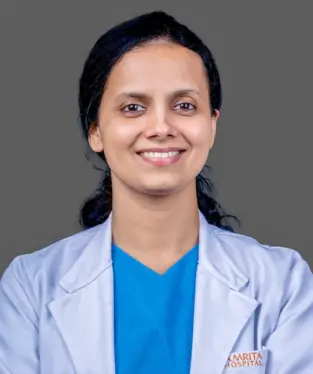
MBBS, M. Ch. (Gynaecologic Oncology), MD (Obs & Gynae)
Senior Consultant - Gynae Oncologist and Robotic Surgeon, Department of Gynecologic Oncology, Amrita Institute of Medical Sciences, Kochi, Kerala
Dr. Priya Bhati is a Senior Consultant Gynae Oncologist and Robotic Surgeon at Amrita Institute of Medical Sciences, Kochi. She specialises in the treatment of gynaecological cancers and complex gynaecological conditions, with expertise in cancer surgery, robotic-assisted surgery and laparoscopic surgery. With years of experience at leading institutions such as CMC Vellore and PGIMER Chandigarh, she brings extensive surgical experience along with a caring and patient-focused approach.
Dr. Priya has completed her M.B.B.S. from Kasturba Medical College, Mangalore, M.D. in Obstetrics & Gynecology from Goa Medical College, and M.Ch. in Gynaecologic Oncology from Christian Medical College, Vellore. She treats women with different types of gynaecological cancers and also performs complex benign gynaecological surgeries and advanced procedures such as CRS and HIPEC.
She believes that every patient deserves to understand her condition and treatment clearly. Along with treating gynaecological cancers, Dr. Priya also focuses on prevention and early detection, including HPV vaccination and preventive gynaecologic care. Her goal is to provide personalised treatment while making patients and their families feel informed, comfortable and supported throughout their care.
I was very scared when I came to know about my cancer. Dr. Priya Bhati explained everything clearly and told me what we should do next. I am really thankful for her support.
Dr. Bhati is very patient and listens to all your doubts. She explained my reports in simple words and did not make me feel rushed. I felt much better after talking to her.
We met Dr. Priya Bhati for my mother’s treatment. She explained the surgery properly and answered all our questions. We felt that she really understood our concerns.
I was worried about having surgery, but Dr. Bhati explained the procedure and what to expect. She was very calm and supportive. I am happy that we consulted her.
Dr. Bhati gave us enough time during the consultation and explained the treatment options clearly. She also listened to what we wanted to know. Very good doctor and a very positive experience.
After my diagnosis, I was confused about what to do next. Dr. Bhati went through my reports and explained everything step by step. Her guidance gave me confidence to start my treatment.