
Fertility Sparing Cancer Surgery in Kochi
Treating Cancer While Keeping Future Pregnancy in Mind
Cancer treatment with fertility preservation in mind, offering carefully selected women the option to protect their future chances of pregnancy.
Cancer treatment with fertility preservation in mind, offering carefully selected women the option to protect their future chances of pregnancy.
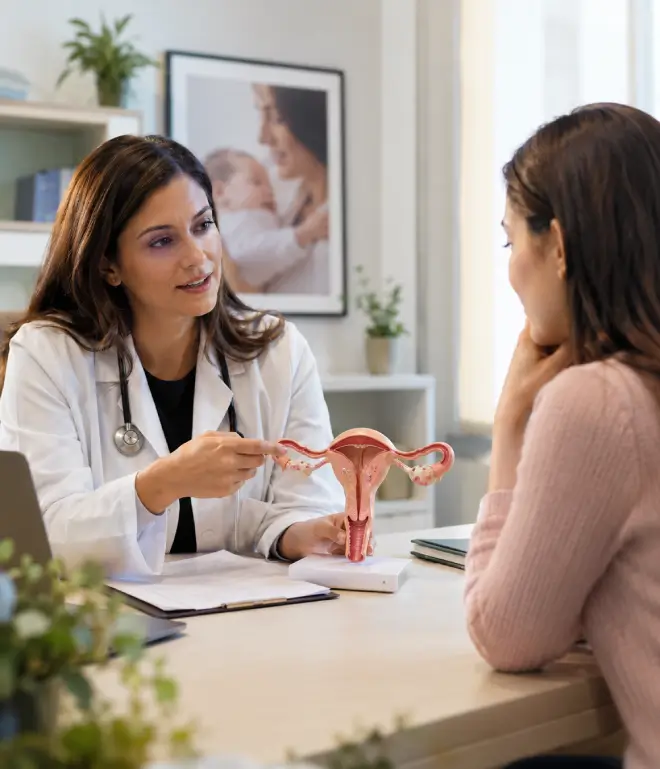
Fertility-sparing cancer surgery aims to treat the cancer while preserving the uterus, ovarian function or both when this can be done safely. It may be considered for selected women with early-stage cervical cancer, ovarian cancer or endometrial cancer. The decision depends on the type and stage of cancer, tumour characteristics, fertility goals and other clinical factors. Amrita Hospital's Gynaecologic Oncology division specifically lists fertility preservation in early ovarian, endometrial and cervical cancers and provides oncofertility services.
Preserving fertility is not about choosing a less effective cancer treatment. The priority remains treating the cancer appropriately. Where a fertility-sparing approach is considered safe, the surgical plan is designed to remove or treat the cancer while retaining reproductive potential as far as possible. Dr. Priya Bhati has specialised training in gynaecologic oncology and performs gynaecologic cancer surgeries at Amrita Hospital, Kochi.
Being diagnosed with cancer can be particularly difficult for a woman who has not yet completed her family.
Along with questions about treatment and recovery, there may be another very personal question:
"Will I still be able to have children after cancer treatment?"
For some women, the answer may be yes.
Fertility-sparing cancer treatment refers to carefully selected treatment approaches that aim to treat the cancer while preserving the possibility of future pregnancy.
Depending on the type of cancer, this may involve preserving the uterus, retaining one or both ovaries, or using a specialised surgical procedure that removes the cancer while leaving reproductive organs that may allow pregnancy in the future.
However, fertility preservation is not suitable for every woman with cancer.
The first priority is always appropriate cancer treatment. A fertility-sparing operation should only be considered when the cancer can be treated safely without compromising the necessary cancer treatment.
This is why the decision needs to be made by a specialist in gynaecologic oncology, often together with a fertility specialist.
Fertility-sparing treatment may be considered in selected cases of:
The options are very different for each cancer.
For example, fertility preservation in cervical cancer may involve preserving the uterus while removing the cervix and surrounding cancerous tissue. In selected early ovarian cancers, one ovary and the uterus may sometimes be preserved. For carefully selected endometrial cancer patients, medical treatment may sometimes be considered instead of immediate hysterectomy.
The suitability of each approach depends on the individual diagnosis.
Amrita's Gynaecologic Oncology division lists fertility preservation in early ovarian, endometrial and cervical cancers as part of its specialised services.
Cervical cancer is one of the gynaecological cancers where fertility-preserving surgery may be possible in selected women.
For some early cervical cancers, a procedure called radical trachelectomy may be considered.
A radical trachelectomy removes the cervix and surrounding tissues while preserving the body of the uterus.
The purpose is to remove the cancer while retaining the uterus, which may allow pregnancy in the future for appropriately selected patients.
The operation may also involve assessment of nearby lymph nodes to determine whether there is evidence of cancer spread.
However, radical trachelectomy is not suitable for every cervical cancer.
Factors such as:
may influence whether a fertility-sparing procedure can be considered.
If fertility is important to you after a cervical cancer diagnosis, it is worth raising the subject before treatment begins.
Ovarian cancer presents a different fertility challenge.
In selected young women with early-stage ovarian cancer, it may sometimes be possible to remove the affected ovary while preserving the other ovary and uterus.
This is generally considered only when the cancer characteristics and stage make fertility-sparing treatment appropriate.
The type of ovarian cancer matters as well. Different ovarian cancers behave differently and have different treatment requirements.
The final treatment decision may depend on the pathology, stage, tumour characteristics and whether the remaining ovary and uterus can safely be preserved.
Amrita Hospital specifically lists fertility-sparing staging surgery for young women with ovarian cancer among its gynaecologic oncology services.
Endometrial cancer usually occurs in older women, but it can also occur in younger women who have not completed their family.
For carefully selected patients with certain early endometrial cancers, fertility-sparing treatment may sometimes be considered instead of immediate hysterectomy.
This is a highly selective approach.
The cancer needs to meet specific clinical and pathological criteria, and treatment requires close follow-up.
Fertility-sparing management for endometrial cancer is not the same as simply delaying surgery. The cancer must be monitored carefully, and the patient needs to understand that definitive surgery may still be recommended later depending on the response, recurrence or future circumstances.
The treatment approach should therefore be discussed with a gynaecologic oncologist who can assess whether preserving fertility is medically reasonable.
Amrita's Gynaecologic Oncology division lists fertility preservation in endometrial cancer among its specialised services.
Once cancer treatment begins, some fertility-preservation options may become more difficult or may no longer be possible.
For example, chemotherapy, radiation therapy and some cancer surgeries can affect reproductive function.
This is why fertility should be discussed early, ideally before treatment begins.
Depending on your cancer and treatment plan, you may be referred to a fertility specialist to discuss options such as:
Not every option will be suitable for every patient.
Your age, ovarian reserve, cancer type, urgency of treatment and treatment plan all matter.
Amrita Hospital provides oncofertility services where younger women with cancer can discuss fertility-preservation options with a fertility specialist alongside their cancer care.
No.
This is an important distinction.
The purpose of fertility-sparing treatment is not to give a weaker cancer treatment simply because the patient wants to preserve fertility.
The cancer still needs to be treated according to accepted oncological principles.
A fertility-sparing operation is considered only when the available evidence and the patient's individual cancer characteristics suggest that cancer treatment can be achieved while preserving reproductive potential.
If preserving fertility would compromise cancer treatment, it may not be recommended.
Your doctor should explain both possibilities clearly:
What treatment is needed to control the cancer?
and
Can fertility be preserved without compromising that treatment?
That conversation is central to fertility-sparing cancer care.
There is no single age or diagnosis that automatically qualifies someone for fertility preservation.
Your doctor may consider factors such as:
The decision is therefore made on an individual basis.
Two women with the same broad cancer diagnosis may receive different recommendations because their tumour characteristics or reproductive goals are different.
The first consultation should address both sides of the situation.
You need to understand your cancer, but you also need an opportunity to explain your fertility goals.
Your doctor may review:
You may also be advised to meet a fertility specialist before cancer treatment if additional fertility-preservation measures should be considered.
The aim is to make sure the cancer treatment plan and fertility plan are considered together rather than separately.
For some gynaecological cancers, assessing nearby lymph nodes is an important part of cancer staging.
This may also be necessary during fertility-sparing surgery.
For example, in selected cervical cancer patients undergoing fertility-sparing surgery, lymph-node assessment can help determine whether the cancer has spread.
Amrita Hospital uses sentinel lymph-node mapping in the surgical management of selected cervical, endometrial and vulvar cancers.
The exact method used depends on the cancer and the surgical plan.
Sometimes fertility can still be preserved, but chemotherapy can affect ovarian function and fertility depending on the drugs used, doses and the patient's age and baseline ovarian reserve.
This is why fertility preservation should ideally be discussed before chemotherapy starts.
If chemotherapy is urgent, there may be limited time to complete fertility-preservation procedures.
Your oncology and fertility teams can discuss which options are practical within the available treatment window.
Radiation treatment involving the pelvis can affect reproductive organs.
Depending on the treatment area and dose, pelvic radiation can affect the uterus and ovaries and may make pregnancy more difficult or impossible.
In selected situations where pelvic radiation is necessary, fertility-preservation strategies may be discussed.
Amrita's Gynaecologic Oncology division specifically mentions ovarian transposition as one possible fertility-preservation approach when radiation therapy is required for selected cervical cancer patients.
Whether this is appropriate depends on the planned radiation field and the individual cancer.
Possibly, depending on the cancer and the procedure.
Preserving the uterus and ovarian function may allow natural conception in some women.
However, fertility after cancer treatment can depend on several factors, including:
Some women may require assistance from fertility specialists after cancer treatment.
The important point is that fertility-sparing treatment preserves the possibility of future pregnancy. It cannot guarantee pregnancy.
There is no universal waiting period.
The appropriate time depends on the type of cancer, treatment received, risk of recurrence, medications, recovery and advice from your oncology team.
Your doctor may recommend completing a period of follow-up before attempting pregnancy.
This decision should be made with your treating cancer specialist and fertility team rather than based on a fixed timeline found online.
Tell your treating doctor about your fertility plans as soon as possible.
Even if treatment has already started, there may still be options to discuss.
However, the available choices can become more limited once certain treatments have been completed.
Your medical records, pathology, imaging and treatment details will be important when discussing what may still be possible.
Sometimes preserving fertility is simply not medically appropriate.
If the cancer is too advanced, has high-risk characteristics or requires treatment that cannot safely be combined with fertility preservation, your doctor may recommend standard cancer treatment.
This can be a difficult conversation, particularly for a younger woman.
But the purpose of a fertility-sparing consultation is not to promise fertility preservation. It is to determine honestly whether it can be achieved without compromising cancer treatment.
If it cannot, your doctor can also discuss fertility-preservation options that may be possible before certain treatments, when time and the clinical situation allow.
Fertility-sparing cancer treatment sits at the intersection of cancer surgery and reproductive goals.
The doctor needs to understand the cancer well enough to know when fertility preservation is safe and when it may create unacceptable cancer risk.
Dr. Priya Bhati completed her MCh in Gynaecologic Oncology from Christian Medical College, Vellore, after her MD in Obstetrics & Gynecology. She has worked in dedicated gynaecologic oncology departments at CMC Vellore and Amrita Hospital, Kochi. Her current Amrita profile lists all gynaecologic cancer surgeries, robotic-assisted gynae cancer and benign gynae surgeries, laparoscopic gynae and gynae oncology surgeries, complex benign gynaecological surgeries and preventive gynaecologic oncology among her areas of expertise.
Amrita's gynaecologic oncology programme also has dedicated oncofertility services and multidisciplinary tumour-board discussions involving oncology, pathology, radiology and other specialists.
For a woman who wants children in the future, the words "cancer surgery" can immediately raise another fear: "Will I still be able to have a baby?"
That question deserves to be part of the treatment discussion from the beginning.
Dr. Priya Bhati provides specialist gynaecologic oncology care in Kochi, including fertility-sparing surgical management for selected gynaecological cancers.
The treatment plan depends on the exact cancer, its stage and your fertility goals. If fertility preservation is medically possible, the aim is to treat the cancer appropriately while retaining reproductive potential wherever it can be done safely.
If you have recently been diagnosed with cervical, ovarian or endometrial cancer and want to understand whether fertility preservation may be an option, a specialist consultation can help clarify what is possible in your specific situation.
If you have already been diagnosed with cancer, bring as much of your medical information as possible.
This may include:
If you have a specific pregnancy plan or have been trying to conceive, tell your doctor.
That information can influence the discussion around treatment and fertility preservation.
Before making a treatment decision, you may want to ask:
These questions are worth discussing before treatment rather than after surgery.
A cancer diagnosis can make you feel that everything has to happen immediately.
But if having children in the future matters to you, fertility should not be left out of the treatment discussion.
For selected women, fertility-sparing cancer treatment can make it possible to treat the cancer while preserving reproductive potential.
For others, standard cancer treatment may be safer, and fertility preservation may need to be considered separately before treatment.
The answer depends on your individual cancer.
Speak with Dr. Priya Bhati about your diagnosis, cancer treatment options and whether a fertility-sparing approach may be appropriate.
Book a Fertility-Sparing Cancer Surgery Consultation
1. What is fertility-sparing cancer surgery?
Fertility-sparing cancer surgery is a treatment approach designed to treat selected gynaecological cancers while preserving reproductive organs or ovarian function when this can be done safely.
2. Can cancer surgery preserve my ability to have children?
In selected patients, yes. The possibility depends on the type and stage of cancer, tumour characteristics, treatment required and your individual fertility goals.
3. Which cancers can be treated with fertility-sparing surgery?
Fertility-sparing treatment may be considered in selected early cervical cancers, early ovarian cancers and certain endometrial cancers. The approach is different for each cancer.
4. Can cervical cancer surgery preserve fertility?
In selected women with early cervical cancer, fertility-sparing surgery such as radical trachelectomy may be considered. Suitability depends on tumour size, stage, location and other cancer-related factors.
5. What is radical trachelectomy?
Radical trachelectomy removes the cervix and surrounding tissues while preserving the body of the uterus. It may allow future pregnancy in carefully selected women with cervical cancer.
6. Can fertility be preserved in ovarian cancer?
Selected young women with early ovarian cancer may be candidates for fertility-sparing surgery in which the affected ovary is removed while the uterus and the other ovary are preserved when medically appropriate.
7. Can fertility be preserved in endometrial cancer?
Certain women with carefully selected early endometrial cancers may be considered for fertility-sparing treatment. This requires strict selection and close follow-up, and it is not appropriate for every patient.
8. Does fertility-sparing surgery mean that cancer treatment is less effective?
The aim is not to reduce the effectiveness of cancer treatment. Fertility-sparing treatment is considered only when the cancer can be treated safely while preserving reproductive potential.
9. Can I freeze my eggs before cancer treatment?
Egg or embryo freezing may be an option for some women before cancer treatment. The decision depends on your age, ovarian reserve, cancer type and how quickly treatment needs to begin. A fertility specialist can discuss the available options.
10. Can chemotherapy affect fertility?
Yes. Some chemotherapy treatments can affect ovarian function and fertility. The effect depends on the medicines used, treatment dose, duration and individual factors.
11. Can radiation affect fertility?
Pelvic radiation can affect reproductive organs and fertility. In selected cases, fertility-preservation strategies may be discussed before radiation begins.
12. Can I become pregnant after fertility-sparing cancer surgery?
Pregnancy may be possible for some women, depending on the type of cancer, surgery, ovarian function and any additional treatment received. Fertility-sparing surgery cannot guarantee a future pregnancy.
13. Will I need IVF after fertility-sparing cancer surgery?
Not necessarily. Some women may conceive naturally, while others may need fertility treatment depending on their reproductive function and other factors.
14. When should I discuss fertility with my cancer doctor?
Ideally, fertility should be discussed as early as possible after a cancer diagnosis and before treatment begins, particularly if future pregnancy is important to you.
15. What if I have already started cancer treatment?
Tell your treating team about your fertility concerns as soon as possible. The available fertility-preservation options may depend on which treatment you have already received.
16. Is fertility-sparing treatment possible for advanced cancer?
It depends on the cancer. Fertility-sparing treatment is generally considered only when it can be done without compromising cancer treatment. Advanced or high-risk disease may make preservation inappropriate.
17. Can the cancer come back after fertility-sparing treatment?
Cancer recurrence remains possible after any cancer treatment. This is why careful patient selection and regular follow-up are important after fertility-sparing treatment.
18. Will I need regular follow-up after fertility-sparing treatment?
Yes. Close follow-up is an important part of fertility-sparing cancer care. The frequency and type of follow-up depend on the cancer and treatment received.
19. Can I get a second opinion about fertility-sparing cancer surgery?
Yes. A second opinion can be particularly useful when you are deciding between standard cancer treatment and a fertility-sparing approach. Bring your pathology reports, scans and previous treatment records.
20. Where can I consult for fertility-sparing cancer surgery in Kochi?
Dr. Priya Bhati provides gynaecologic oncology care at Amrita Hospital, Kochi. Amrita's Gynaecologic Oncology division offers fertility-sparing surgery for selected cervical, ovarian and endometrial cancers and has oncofertility services.

MBBS, M. Ch. (Gynaecologic Oncology), MD (Obs & Gynae)
Senior Consultant - Gynae Oncologist and Robotic Surgeon, Department of Gynecologic Oncology, Amrita Institute of Medical Sciences, Kochi, Kerala
Dr. Priya Bhati is a Senior Consultant Gynae Oncologist and Robotic Surgeon at Amrita Institute of Medical Sciences, Kochi. She specialises in the treatment of gynaecological cancers and complex gynaecological conditions, with expertise in cancer surgery, robotic-assisted surgery and laparoscopic surgery. With years of experience at leading institutions such as CMC Vellore and PGIMER Chandigarh, she brings extensive surgical experience along with a caring and patient-focused approach.
Dr. Priya has completed her M.B.B.S. from Kasturba Medical College, Mangalore, M.D. in Obstetrics & Gynecology from Goa Medical College, and M.Ch. in Gynaecologic Oncology from Christian Medical College, Vellore. She treats women with different types of gynaecological cancers and also performs complex benign gynaecological surgeries and advanced procedures such as CRS and HIPEC.
She believes that every patient deserves to understand her condition and treatment clearly. Along with treating gynaecological cancers, Dr. Priya also focuses on prevention and early detection, including HPV vaccination and preventive gynaecologic care. Her goal is to provide personalised treatment while making patients and their families feel informed, comfortable and supported throughout their care.
I was very scared when I came to know about my cancer. Dr. Priya Bhati explained everything clearly and told me what we should do next. I am really thankful for her support.
Dr. Bhati is very patient and listens to all your doubts. She explained my reports in simple words and did not make me feel rushed. I felt much better after talking to her.
We met Dr. Priya Bhati for my mother’s treatment. She explained the surgery properly and answered all our questions. We felt that she really understood our concerns.
I was worried about having surgery, but Dr. Bhati explained the procedure and what to expect. She was very calm and supportive. I am happy that we consulted her.
Dr. Bhati gave us enough time during the consultation and explained the treatment options clearly. She also listened to what we wanted to know. Very good doctor and a very positive experience.
After my diagnosis, I was confused about what to do next. Dr. Bhati went through my reports and explained everything step by step. Her guidance gave me confidence to start my treatment.