
Vulval Cancer Surgery Specialist in Kochi

Specialist Surgery for Vulval Cancer, With Careful Attention to Cancer Control and Function

Specialist vulval cancer surgery tailored to the tumour, with expert surgical evaluation and lymph-node assessment when required.
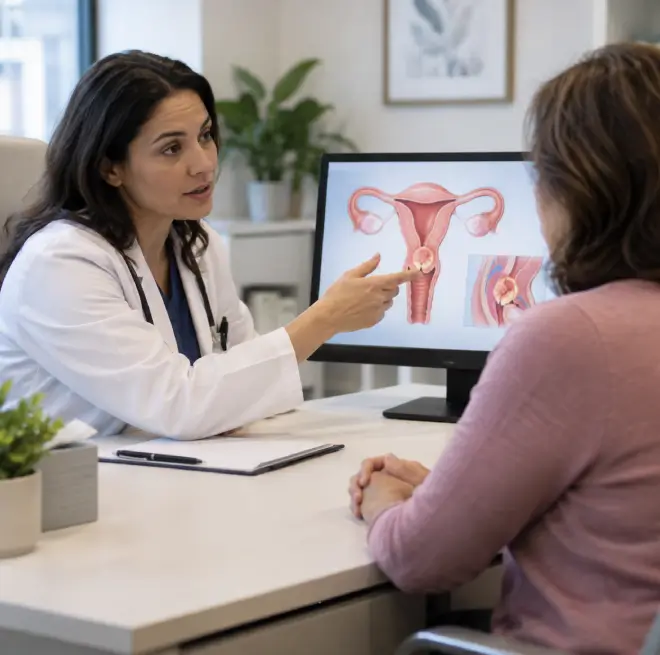

Vulval Cancer Surgery in Kochi

Surgery is the main treatment for many women with localized vulval cancer, but the operation does not have to be the same for every patient. Depending on the tumour, treatment may involve a wide local excision, radical local excision, partial vulvectomy or a more extensive operation. Assessment of the groin lymph nodes may also be necessary because vulval cancer can spread through the lymphatic system.

Dr. Priya Bhati specialises in gynaecologic cancer surgery and has expertise in the surgical treatment of complex gynaecologic cancers. Amrita Hospital's Gynaecologic Oncology Division provides treatment for vulval cancer, including radical vulvectomy and inguinal node dissection, with surgical, medical oncology, radiation oncology, radiology and pathology specialists involved in multidisciplinary treatment planning.

What Is Vulval Cancer?

Vulval cancer develops in the tissues of the vulva, the external female genital area.

The vulva includes structures such as:

  • Labia majora
  • Labia minora
  • Clitoris
  • Area around the vaginal opening
  • Surrounding vulval skin

Vulval cancer is different from vaginal cancer. Although the two conditions are anatomically close, their patterns of spread and treatment can be different.

Most vulval cancers are squamous cell carcinomas, although other less common types can occur.

Because the vulva is visible, women may notice a change before cancer is diagnosed. However, vulval cancer can sometimes be mistaken for an infection, skin condition or other benign problem.

A persistent change should therefore be examined rather than repeatedly treated without establishing the cause.

What Symptoms Can Vulval Cancer Cause?

Vulval cancer can present in different ways.

Possible symptoms include:

  • A lump on the vulva
  • A persistent sore or ulcer
  • A change in skin colour
  • Thickening of the skin
  • Itching that does not settle
  • Burning or irritation
  • Bleeding
  • Pain
  • A change in the appearance of the vulva
  • A growth that increases in size
  • A non-healing wound

These symptoms do not automatically mean cancer.

Conditions such as infections, eczema, lichen sclerosus and other vulval disorders can cause similar complaints.

The concern increases when a lesion persists, changes or does not respond to the treatment expected for a benign condition.

When Should a Vulval Lesion Be Biopsied?

A biopsy may be recommended when there is a suspicious or persistent vulval lesion.

This is particularly important when there is:

  • A persistent ulcer
  • A new lump
  • A thickened area
  • A change in pigmentation
  • A lesion that is growing
  • A lesion that bleeds
  • A persistent area of itching or irritation with visible skin changes
  • A suspected precancerous lesion

A biopsy provides tissue for microscopic examination.

The pathology report can establish whether the lesion is benign, precancerous or invasive cancer.

Treatment should be based on an accurate diagnosis rather than appearance alone.

Vulval Intraepithelial Neoplasia and Vulval Cancer Are Different

Women are sometimes told that they have VIN and understandably become worried that they already have cancer.

VIN stands for vulval intraepithelial neoplasia.

It refers to abnormal cells in the vulval skin that have not invaded deeper tissues.

Vulval cancer is invasive disease.

Treatment for VIN depends on its type, extent and symptoms and may include surgical or non-surgical options. The treatment approach is different from that used for invasive vulval cancer.

If a biopsy has reported VIN, specialist evaluation can help determine whether observation, local treatment or surgery is appropriate.

Why the Location of Vulval Cancer Matters

The vulva is made up of several structures, and the location of the tumour can affect the surgical plan.

Your surgeon will consider:

  • Exact location of the tumour
  • Distance from the midline
  • Size
  • Depth of invasion
  • Whether nearby structures are involved
  • Whether the tumour is close to the clitoris
  • Whether the tumour is close to the urethra
  • Whether the vagina is involved
  • Whether the anus or perineum is involved
  • Whether groin lymph nodes appear abnormal

A small tumour located away from important structures may be treated very differently from a larger lesion involving the midline or nearby organs.

This is why vulval cancer surgery needs careful planning before the operation.

Wide Local Excision for Vulval Cancer

For selected localized vulval cancers, wide local excision may be appropriate.

The surgeon removes the tumour along with a margin of surrounding normal-looking tissue.

The aim is to completely remove the cancer while preserving as much normal vulval tissue and function as safely possible.

Modern treatment has moved away from automatically removing the entire vulva when a more limited cancer operation can achieve appropriate cancer control.

NCI guidance notes that radical local excision has generally replaced radical vulvectomy for many tumours clinically confined to the vulva or perineum.

The exact operation depends on tumour size, depth, location and the need for lymph-node assessment.

Radical Local Excision

A radical local excision removes the tumour with a larger surrounding margin when required.

It is still a focused operation rather than automatically removing the entire vulva.

The aim is to obtain adequate cancer margins while limiting unnecessary removal of healthy tissue.

Whether radical local excision is appropriate depends on the tumour's characteristics and whether the surgeon can achieve appropriate margins without compromising cancer treatment.

Partial Vulvectomy

A partial vulvectomy involves removing part of the vulva.

This may be required when the tumour involves a larger area or when a smaller excision would not provide adequate cancer clearance.

The amount of tissue removed is planned around the cancer.

The objective is to remove the disease while preserving as much normal anatomy as possible.

Radical Vulvectomy

Radical vulvectomy is a much more extensive operation.

It involves removing a larger portion or the entire vulva and may be combined with groin lymph-node surgery.

It is not required for every woman with vulval cancer.

Modern treatment increasingly uses more limited surgery where this can provide appropriate cancer control. More extensive surgery may still be necessary for larger, deeper or anatomically difficult tumours.

The decision should be based on the actual extent of cancer rather than the diagnosis alone.

Why Are Groin Lymph Nodes Important?

The lymphatic drainage of the vulva commonly passes toward the inguinal, or groin, lymph nodes.

Cancer cells can travel from the primary tumour to these nodes.

Whether the lymph nodes contain cancer is an important factor in staging and can influence additional treatment.

This means that treating vulval cancer may involve both:

  1. Removing the primary tumour
  2. Assessing the appropriate lymph nodes

The two parts of the operation are planned according to the tumour's characteristics.

Sentinel Lymph Node Surgery

Sentinel lymph node biopsy can help assess whether cancer has reached the groin lymph nodes in selected women with early vulval cancer.

The sentinel nodes are the first lymph nodes that cancer cells are most likely to reach from the primary tumour.

During the procedure, these nodes are identified and removed for pathological examination.

If the sentinel node does not contain cancer, some patients may be able to avoid a more extensive groin lymph-node dissection.

Current ESGO guidance includes sentinel lymph-node procedures as part of the management of appropriately selected early-stage vulval cancers.

This approach can reduce the amount of lymph-node surgery required in suitable patients.

When Is Groin Lymph Node Dissection Required?

Some women require removal of more lymph nodes from the groin.

This may be considered when:

  • The tumour is not suitable for sentinel node surgery
  • Sentinel nodes cannot be assessed appropriately
  • Cancer is found in the sentinel node
  • The tumour has characteristics associated with a higher risk of nodal spread
  • The disease is more extensive

Groin lymph-node surgery is an important part of treatment for selected vulval cancers, but it also carries potential risks.

These include:

  • Leg swelling or lymphoedema
  • Fluid collection
  • Wound problems
  • Infection
  • Delayed healing
  • Numbness or discomfort

The decision to perform the procedure therefore needs to balance staging and treatment needs with the potential impact on recovery.

What Is Lymphoedema After Groin Surgery?

Lymphoedema is swelling that can develop when lymphatic drainage is affected.

After groin lymph-node surgery, some women may experience swelling of the leg or surrounding tissues.

The risk depends on the extent of lymph-node surgery and whether radiation is also required.

Your medical team can advise you about measures that may reduce complications and what symptoms should be reported after surgery.

Early recognition of persistent swelling can be helpful.

When Is Radiation Used for Vulval Cancer?

Surgery is not the only treatment for vulval cancer.

Radiation therapy may be recommended depending on the stage, tumour size, surgical margins and lymph-node findings.

For some women with more advanced disease, radiation or chemoradiation may be given before surgery to shrink the tumour and make an operation possible or less extensive.

NCI guidance lists surgery, radiation and combinations of surgery with radiation or chemoradiation among the treatment approaches used according to stage.

The sequence is decided according to the individual cancer.

When Chemoradiation May Be Considered

Some larger or locally advanced vulval cancers may be difficult to remove safely as an initial operation.

In such situations, chemoradiation may be considered before surgery.

The goal can be to reduce the extent of disease and improve the possibility of achieving an appropriate surgical result.

This is one reason why vulval cancer treatment should be discussed in a multidisciplinary setting rather than viewing surgery in isolation.

What Happens If the Surgical Margin Is Close?

After the tumour is removed, the pathology team examines the edges of the specimen.

These edges are called surgical margins.

If cancer cells extend to the margin, the report may describe the margin as involved or positive.

A close or positive margin can affect the next treatment decision.

Depending on the circumstances, options may include:

  • Additional surgery
  • Radiation therapy
  • Further specialist assessment

The decision depends on the location of the tumour, the exact pathology and how much additional tissue can safely be removed.

Vulval Cancer Near the Clitoris

A tumour close to the clitoris can create particularly difficult surgical decisions.

The surgeon has to consider cancer clearance while also considering the potential impact on sensation and sexual function.

The appropriate operation depends on:

  • Tumour size
  • Depth
  • Exact location
  • Distance from the clitoris
  • Whether surrounding structures are involved
  • Whether adequate margins can be achieved

A specialist consultation is particularly important when the tumour is close to functionally important structures.

Vulval Cancer Near the Urethra or Anus

Tumours located close to the urethra, anus or vaginal opening can also require more detailed planning.

Imaging and examination may be needed to establish whether these structures are involved.

If a tumour extends into surrounding tissues, surgery may become more extensive or radiation-based treatment may become a more important part of the treatment plan.

The goal is to achieve appropriate cancer control without performing unnecessary surgery.

Reconstructive Surgery After Vulval Cancer Surgery

Some vulval cancer operations leave a defect that may benefit from reconstruction.

Reconstructive surgery can involve rearranging nearby tissue or using a flap to cover the area where tissue has been removed.

This may help with:

  • Wound closure
  • Healing
  • Protection of exposed tissue
  • Comfort
  • Functional recovery

Reconstruction may be considered particularly when a larger amount of vulval or perineal tissue has to be removed.

The need for reconstruction depends on the size and location of the surgical defect.

Does Vulval Cancer Surgery Affect Sexual Function?

It can.

The vulva contains structures involved in sexual sensation, and treatment can alter anatomy or sensitivity.

Possible effects depend on:

  • Location of the tumour
  • Amount of tissue removed
  • Whether the clitoris is involved
  • Extent of surgery
  • Radiation treatment
  • Healing
  • Emotional response to cancer treatment

These concerns are legitimate and should be discussed before surgery.

A cancer operation should consider both disease control and the woman's postoperative quality of life.

Can Vulval Cancer Affect Urination?

Most limited vulval cancer operations do not significantly alter urinary function.

However, tumours located close to the urethra or extensive surgery involving nearby structures can affect urination.

If the tumour is close to the urinary opening, your surgeon can explain whether the operation is likely to affect urinary function and what precautions or additional procedures may be needed.

What Happens Before Vulval Cancer Surgery?

Before surgery, your medical team may review:

  • Biopsy report
  • Pathology findings
  • Physical examination
  • Pelvic examination
  • Imaging
  • Tumour measurements
  • Groin lymph-node findings
  • Previous vulval procedures
  • Previous cancer treatment
  • General health and medical conditions

Imaging may be recommended when there is concern about deeper or more extensive disease.

The aim is to understand the tumour before deciding how much surgery is appropriate.

Why Specialist Pathology Review Can Matter

Vulval lesions can represent several different conditions.

A pathology report may need to distinguish between:

  • Benign vulval disease
  • VIN
  • Squamous cell carcinoma
  • Melanoma
  • Adenocarcinoma
  • Other rare tumours

The tumour type can influence treatment.

If the diagnosis is unusual or unclear, a specialist pathology review may be considered before a major operation is planned.

Vulval Cancer and HPV

Some vulval cancers are associated with persistent high-risk HPV infection.

However, not every vulval cancer is HPV-related.

There are different pathways through which vulval cancer can develop, and the patient's age, pathology and underlying vulval condition can influence the clinical picture.

This is another reason why a biopsy and appropriate pathology assessment are important.

HPV vaccination can reduce the risk of HPV-related disease, but vaccination does not eliminate the need to investigate suspicious vulval lesions.

What If the Vulval Cancer Has Spread?

Treatment depends on where the cancer has spread.

If the disease remains localized to the vulva and nearby groin nodes, surgery with or without radiation may be appropriate depending on the stage.

More advanced disease may require radiation or chemoradiation before surgery.

For very advanced disease, treatment may involve a combination of surgery, radiation and systemic treatment.

NCI treatment guidance describes different combinations of surgery, radiation and chemoradiation according to stage.

There is no single operation that is appropriate for every stage.

Surgery for Recurrent Vulval Cancer

Vulval cancer can recur after treatment.

A recurrence may appear:

  • At the original surgical site
  • Elsewhere on the vulva
  • In the groin
  • In the pelvis
  • At a distant site

Treatment depends on the location and extent of recurrence and on previous treatment.

For selected local recurrences, wide local excision may be considered.

More extensive recurrent disease can require complex surgery, radiation, chemotherapy or a combination.

NCI lists wide local excision, radical vulvectomy, pelvic exenteration, radiation and chemotherapy-based approaches among options that may be considered for recurrent disease depending on the situation.

Pelvic Exenteration for Vulval Cancer

Pelvic exenteration is a highly extensive operation involving removal of multiple pelvic organs.

It is not a routine treatment.

In carefully selected women with extensive local or recurrent cancer, it may be considered when the disease can potentially be removed and the expected benefit justifies the scale of the operation.

This requires detailed imaging, multidisciplinary discussion and careful consideration of the woman's overall health and treatment goals.

Recovery After Vulval Cancer Surgery

Recovery depends on the type of surgery performed.

A small local excision has a very different recovery period from a radical vulvectomy with groin lymph-node surgery.

After surgery, your care team will monitor:

  • Wound healing
  • Pain
  • Bleeding
  • Infection
  • Urination
  • Mobility
  • Leg swelling
  • Lymphoedema
  • Bowel function when relevant

You may need to limit certain activities during the initial healing period.

Your surgeon will explain when you can return to exercise, work and sexual activity.

Wound Healing After Vulval Surgery

The vulval area can be challenging for wound healing because of its location and the movement and moisture in the area.

Healing can take longer after extensive surgery.

Possible complications include:

  • Wound separation
  • Infection
  • Fluid collection
  • Delayed healing
  • Persistent discomfort
  • Need for additional wound care

If a large area has been removed, reconstructive techniques may be considered to support closure and healing.

Follow-Up After Vulval Cancer Treatment

Follow-up is an important part of cancer care.

Your doctor may examine:

  • Vulval surgical site
  • Groin
  • Vaginal area
  • Nearby tissues
  • Areas where recurrence could develop

The exact follow-up schedule depends on your original cancer and treatment.

You should also report new symptoms such as:

  • A new lump
  • Persistent itching
  • Bleeding
  • A new ulcer
  • Skin changes
  • Persistent pain
  • Swelling in the groin or leg

A new symptom does not necessarily mean recurrence, but it should be assessed.

Why Choose a Gynaecologic Oncologist for Vulval Cancer?

Vulval cancer can involve decisions about both cancer surgery and preservation of function.

A gynaecologic oncologist is specifically trained to manage cancers of the female reproductive system and perform the surgical procedures required for staging and treatment.

Specialist input can be particularly valuable when:

  • The diagnosis is confirmed
  • The lesion is large
  • The tumour is close to the clitoris or urethra
  • Groin lymph-node surgery may be required
  • Sentinel lymph-node assessment is being considered
  • Radiation may be required
  • Reconstruction may be needed
  • The cancer has returned
  • A second opinion is being considered

Dr. Priya Bhati completed her MCh in Gynaecologic Oncology at Christian Medical College, Vellore, following her postgraduate training in Obstetrics and Gynaecology and clinical experience at PGIMER Chandigarh and CMC Vellore. She currently works as an Associate Professor in Gynaecologic Oncology at Amrita Hospital, Kochi.

Her listed areas of expertise include all gynaecologic cancer surgeries, laparoscopic gynaecologic oncology surgery and robotic-assisted gynaecologic cancer surgery.

Multidisciplinary Vulval Cancer Care in Kochi

Vulval cancer treatment may require several specialists.

At Amrita Hospital, Kochi, the Gynaecologic Oncology Division provides treatment for vulval cancer and works with medical oncology, radiation oncology, radiology and pathology specialists as part of multidisciplinary cancer care.

This is particularly relevant when treatment involves both surgery and radiation or when the disease is more advanced.

The purpose of multidisciplinary planning is to consider the available treatment options together rather than deciding on surgery without considering the rest of the cancer treatment plan.

What Should You Bring to Your Consultation?

If you have already been diagnosed with vulval cancer, bring:

  • Biopsy report
  • Pathology report
  • Pathology slides or blocks if available
  • MRI, CT or PET scan reports
  • Actual scan images
  • Previous treatment records
  • Previous surgery reports
  • Medication list
  • Relevant medical history

If another doctor has recommended surgery, bring the treatment plan or consultation notes.

Having the complete information available allows the specialist to understand the diagnosis and discuss the treatment options more accurately.

Questions to Ask Before Vulval Cancer Surgery

Before surgery, you may want to ask:

  • What type of vulval cancer do I have?
  • How deep is the tumour?
  • How large is it?
  • Where exactly is it located?
  • Can the cancer be removed with a limited operation?
  • Will I need a partial or radical vulvectomy?
  • Do I need groin lymph-node surgery?
  • Am I suitable for sentinel lymph-node biopsy?
  • Will the operation affect the clitoris?
  • Could it affect urination?
  • Will reconstruction be required?
  • Could surgery affect sexual function?
  • Will I need radiation after surgery?
  • Could chemoradiation be considered before surgery?
  • What will the final pathology report tell us?
  • What will follow-up involve?

These questions can help you understand the purpose and expected extent of the operation before treatment begins.

Vulval Cancer Surgery in Kochi With Dr. Priya Bhati

Vulval cancer treatment is not simply about removing as much tissue as possible.

The operation needs to remove the cancer adequately while considering the surrounding anatomy, lymph-node involvement, wound healing and the woman's quality of life.

For some women, a focused local excision may be enough. Others may need lymph-node surgery, a larger vulval operation or additional radiation-based treatment.

Dr. Priya Bhati provides specialist gynaecologic oncology care in Kochi, with expertise in gynaecologic cancer surgery and complex surgical procedures.

If you have a suspicious vulval lesion, a biopsy confirming vulval cancer or have already been advised to undergo surgery, a specialist consultation can help clarify the diagnosis and discuss the treatment approach appropriate for your cancer.

Frequently Asked Questions

1. What is vulval cancer surgery?

Vulval cancer surgery involves removing the cancer with an appropriate margin of surrounding tissue. Depending on the tumour, it may also involve assessment or removal of lymph nodes in the groin.

2. Is the entire vulva removed during vulval cancer surgery?

Not necessarily. Many localized cancers can be treated with more limited surgery, such as wide local or radical local excision. The extent of surgery depends on the size, location and depth of the tumour.

3. What is a vulvectomy?

A vulvectomy is an operation to remove part or all of the vulva. A partial, modified radical or radical vulvectomy may be considered depending on the cancer.

4. What is wide local excision?

Wide local excision removes the vulval tumour along with a margin of surrounding tissue. It may be appropriate for selected localized cancers.

5. Will I need lymph-node surgery?

Some women do. The decision depends on factors such as tumour size, depth, location and risk of lymph-node spread.

6. What is sentinel lymph-node biopsy for vulval cancer?

It is a procedure used in selected early-stage vulval cancers to identify and remove the first lymph nodes most likely to contain cancer cells.

7. Can sentinel node surgery help avoid a full groin dissection?

In appropriately selected women, a negative sentinel node may allow the patient to avoid a more extensive groin lymph-node dissection.

8. What are the risks of groin lymph-node surgery?

Potential complications include lymphoedema, wound problems, infection, fluid collection and discomfort.

9. Can vulval cancer be treated without surgery?

Yes. Depending on the stage and location, radiation or chemoradiation may be used, particularly for more advanced cancers or when surgery would be difficult.

10. Will I need radiation after vulval cancer surgery?

Some women do. The decision can depend on the tumour margins, lymph-node findings, tumour characteristics and other pathological factors.

11. Can vulval cancer surgery affect sexual function?

It can, particularly when the tumour is close to the clitoris or when a larger amount of vulval tissue needs to be removed. This should be discussed before surgery.

12. Can vulval cancer surgery affect urination?

Most limited operations do not significantly affect urination, but tumours close to the urethra or extensive surgery may have an effect.

13. Can the vulva be reconstructed after surgery?

Yes. Reconstructive procedures may be considered after larger operations to help close the surgical defect and support healing.

14. What is VIN?

VIN, or vulval intraepithelial neoplasia, refers to abnormal or precancerous cells in the vulval tissue. It is not the same as invasive vulval cancer.

15. Does VIN always become cancer?

No. VIN does not mean that invasive cancer is already present. However, certain types can carry a risk of progression and require appropriate treatment or follow-up.

16. Is vulval cancer related to HPV?

Some vulval cancers are associated with high-risk HPV infection, but not all vulval cancers are HPV-related.

17. Can vulval cancer come back after surgery?

Yes. Recurrence is possible, which is why regular follow-up is important. A new vulval lesion, lump, ulcer, bleeding or persistent symptom should be assessed.

18. Can recurrent vulval cancer be operated on?

In selected cases, yes. The treatment depends on where the cancer has returned, previous treatment and whether the recurrent disease can be removed safely.

19. What should I bring to a vulval cancer consultation?

Bring your biopsy and pathology reports, scan reports and images, previous treatment records and any previous surgical or radiation records.

20. Why should I see a gynaecologic oncologist for vulval cancer?

Vulval cancer can require specialized surgery, groin lymph-node assessment and coordination with radiation or medical oncology. A gynaecologic oncologist has specific training in managing cancers of the female reproductive system.

21. Where can I get vulval cancer treatment in Kochi?

Dr. Priya Bhati provides specialist gynaecologic oncology care in Kochi. Amrita Hospital's Gynaecologic Oncology Division also provides surgical and multidisciplinary treatment for vulval cancer.

Specialised Cancer Care

Best Gynae Cancer Surgeon in Ernakulam

Get specialist evaluation and treatment planning for ovarian, cervical, uterine, vaginal and vulvar cancers, with surgical options tailored to your diagnosis and individual needs.
Gynae Oncologist

Meet Your Gynaecologic Oncology Specialist in Kochi - Dr. Priya Bhati

Dr. Priya Bhati

MBBS, M. Ch. (Gynaecologic Oncology), MD (Obs & Gynae)
Senior Consultant - Gynae Oncologist and Robotic Surgeon, Department of Gynecologic Oncology, Amrita Institute of Medical Sciences, Kochi, Kerala

Dr. Priya Bhati is a Senior Consultant Gynae Oncologist and Robotic Surgeon at Amrita Institute of Medical Sciences, Kochi. She specialises in the treatment of gynaecological cancers and complex gynaecological conditions, with expertise in cancer surgery, robotic-assisted surgery and laparoscopic surgery. With years of experience at leading institutions such as CMC Vellore and PGIMER Chandigarh, she brings extensive surgical experience along with a caring and patient-focused approach.

Dr. Priya has completed her M.B.B.S. from Kasturba Medical College, Mangalore, M.D. in Obstetrics & Gynecology from Goa Medical College, and M.Ch. in Gynaecologic Oncology from Christian Medical College, Vellore. She treats women with different types of gynaecological cancers and also performs complex benign gynaecological surgeries and advanced procedures such as CRS and HIPEC.

She believes that every patient deserves to understand her condition and treatment clearly. Along with treating gynaecological cancers, Dr. Priya also focuses on prevention and early detection, including HPV vaccination and preventive gynaecologic care. Her goal is to provide personalised treatment while making patients and their families feel informed, comfortable and supported throughout their care.

Memberships

  • Association of Gynaecologic Oncologists of India (AGOI)
  • Association of Gynaecologic Robotic Surgeons( AGRS)
  • Society of European Robotic Gynaecological Surgery(SERGS)
  • KLSC ( Kerala state chapter AGOI)

Feedback
Reviews

Patients Testimonial

I was very scared when I came to know about my cancer. Dr. Priya Bhati explained everything clearly and told me what we should do next. I am really thankful for her support.

Anitha

Cancer Patient

Dr. Bhati is very patient and listens to all your doubts. She explained my reports in simple words and did not make me feel rushed. I felt much better after talking to her.

Sheeba

Cancer Patient

We met Dr. Priya Bhati for my mother’s treatment. She explained the surgery properly and answered all our questions. We felt that she really understood our concerns.

Reshma

Cancer Patient

I was worried about having surgery, but Dr. Bhati explained the procedure and what to expect. She was very calm and supportive. I am happy that we consulted her.

Deepa

Cancer Patient

Dr. Bhati gave us enough time during the consultation and explained the treatment options clearly. She also listened to what we wanted to know. Very good doctor and a very positive experience.

Mini

Cancer Patient

After my diagnosis, I was confused about what to do next. Dr. Bhati went through my reports and explained everything step by step. Her guidance gave me confidence to start my treatment.

Neethu

Cancer Patient

Latest Blog

Book An Appointment