
Ovarian Cancer Surgery in Kochi

When Ovarian Cancer Requires More Than Just Removing the Ovary

Ovarian cancer surgery often involves more than removing an ovarian tumour. Dr. Priya Bhati provides specialist surgical care for ovarian cancer, including cancer staging, tumour removal and cytoreductive surgery for selected advanced cancers.
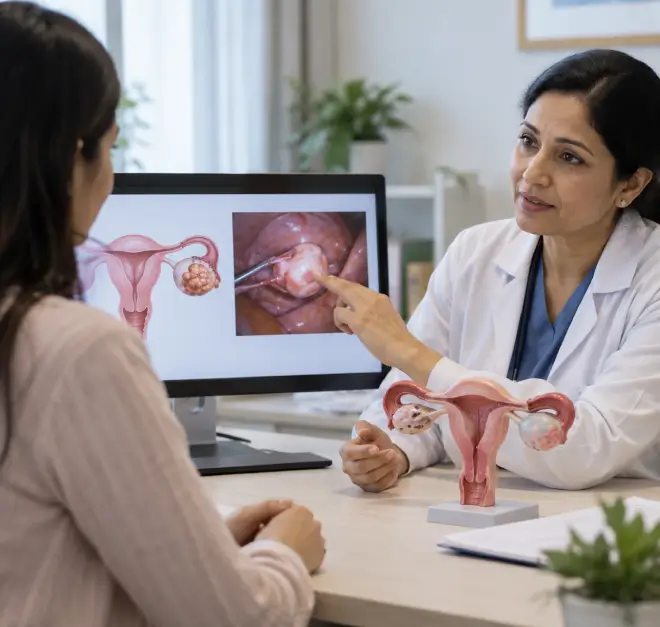

Specialist Surgical Care for Ovarian Cancer

Ovarian cancer can spread within the abdomen before it causes clear symptoms. As a result, surgery may need to address not only the ovaries but also the uterus, fallopian tubes, omentum, lymph nodes and visible areas of cancer elsewhere in the abdomen. The aim is to remove as much cancer as safely and appropriately possible while obtaining the information needed to determine the next stage of treatment.

Dr. Priya Bhati specialises in gynaecologic cancer surgery, including surgery for ovarian cancer and complex procedures such as cytoreductive surgery and HIPEC. Depending on the cancer type, stage, distribution of disease and response to chemotherapy, surgery may be recommended as the first major treatment or after chemotherapy has reduced the disease burden.

Ovarian Cancer Surgery Is Not the Same for Every Patient

When a woman hears that she has ovarian cancer, one of the first questions is often, “Will I need surgery?”

In many ovarian cancers, surgery forms an important part of treatment. But the operation is not the same for everyone.

A small cancer confined to one ovary may require a very different operation from cancer that has spread across the abdominal cavity.

The surgeon needs to understand:

  • What type of ovarian cancer is present
  • How large the tumour is
  • Whether one or both ovaries are involved
  • Whether cancer has spread outside the ovaries
  • Whether the uterus is involved
  • Whether lymph nodes contain cancer
  • Whether there are tumour deposits on the peritoneum
  • Whether the bowel, diaphragm or other abdominal structures are involved
  • Whether chemotherapy should be given before surgery

These factors determine what the operation needs to achieve.

For advanced ovarian cancer, the goal is often not simply to remove the ovaries. It is to remove all visible cancer that can be safely and appropriately resected. This is called cytoreductive surgery, also known as debulking surgery.

Why Is Surgery So Important in Ovarian Cancer?

Ovarian cancer has a tendency to spread across the surfaces within the abdomen.

A tumour may begin in or around an ovary and later involve the pelvic peritoneum, abdominal peritoneum, omentum or other structures.

This means that removing the main ovarian tumour alone may not be enough.

During surgery, the gynaecologic oncologist evaluates the abdomen and pelvis and removes cancerous tissue where appropriate.

The exact procedure depends on the disease.

For some women, surgery may involve removal of one ovary and fallopian tube.

For others, it may involve:

  • Both ovaries and fallopian tubes
  • Uterus and cervix
  • Omentum
  • Pelvic and para-aortic lymph nodes
  • Peritoneal tumour deposits
  • Portions of affected organs when necessary
  • Other areas of visible disease

The aim is to achieve the best possible cancer clearance while keeping the procedure safe for the patient.

What Is Cytoreductive or Debulking Surgery?

Cytoreductive surgery means removing visible cancer deposits from the abdomen and pelvis.

It is one of the central surgical concepts in advanced ovarian cancer.

The amount of tumour left behind after surgery is clinically important. Current treatment guidance for advanced epithelial ovarian cancer places emphasis on complete cytoreduction, meaning no visible residual disease when this can be safely achieved.

This is why ovarian cancer surgery can be extensive.

The surgeon may need to work in several areas of the abdomen rather than focusing only on the ovary.

Depending on where the cancer has spread, cytoreductive surgery may involve removing tumour from the:

  • Pelvic peritoneum
  • Omentum
  • Abdominal peritoneum
  • Diaphragm surface
  • Bowel or surrounding tissues
  • Lymph nodes
  • Other areas affected by tumour

Not every patient needs all of these procedures.

The operation is planned according to the actual distribution of disease.

What Does “Complete Cytoreduction” Mean?

You may hear your doctor use terms such as R0 resection, complete cytoreduction or no gross residual disease.

These terms refer to the absence of visible cancer remaining after surgery.

This is different from saying that every microscopic cancer cell has been removed.

Pathology may still identify microscopic disease, which is one reason chemotherapy and other systemic treatments remain important.

The goal of surgery is to remove visible disease as completely and safely as possible.

In advanced ovarian cancer, achieving complete cytoreduction is an important surgical objective when it can be done safely.

Primary Surgery or Chemotherapy First?

This is one of the most important decisions in advanced ovarian cancer.

Some women are suitable for primary cytoreductive surgery, meaning surgery is performed before chemotherapy.

For others, the cancer may be too extensive for safe or complete removal at the beginning.

In such cases, doctors may recommend neoadjuvant chemotherapy first.

Chemotherapy is then given for a defined number of cycles, followed by another operation called interval cytoreductive surgery if the disease has responded and surgery is appropriate.

Additional chemotherapy is generally given after surgery.

NCI and ESMO both describe surgery before chemotherapy and chemotherapy followed by interval surgery as established treatment pathways for advanced ovarian cancer.

The decision is not based on one scan alone.

The cancer's distribution, the likelihood of complete cytoreduction, the patient's general condition and the expected risks of surgery all need to be considered.

When Is Surgery Done Before Chemotherapy?

Primary cytoreductive surgery may be considered when imaging, examination and specialist assessment suggest that the cancer can be removed to an appropriate extent without unacceptable surgical risk.

The patient also needs to be medically fit enough to undergo the operation.

A specialist team may assess:

  • Disease distribution
  • Tumour burden
  • Involvement of the upper abdomen
  • Bowel involvement
  • Diaphragm disease
  • Liver or spleen involvement
  • General fitness
  • Nutritional status
  • Other medical conditions
  • Expected ability to achieve complete cytoreduction

ESMO guidance states that patients with advanced epithelial ovarian cancer who are fit for surgery and in whom complete resection appears achievable should be evaluated for primary cytoreductive surgery by a specialised team.

When Is Chemotherapy Given Before Surgery?

When complete or satisfactory cytoreduction is not considered achievable safely at the beginning, chemotherapy may be given first.

This is called neoadjuvant chemotherapy.

The purpose is to reduce the amount of cancer and make subsequent surgery more feasible.

After an initial course of chemotherapy, the patient is reassessed.

If the disease has responded and the patient remains suitable for surgery, interval cytoreductive surgery may be performed.

This approach is particularly relevant when ovarian cancer has extensive abdominal disease.

The choice between primary surgery and neoadjuvant chemotherapy should be made by a specialist team rather than based only on the patient's preference for surgery first.

What Happens During Ovarian Cancer Surgery?

The exact procedure depends on the stage and spread of cancer.

For many epithelial ovarian cancers requiring comprehensive surgery, the operation may involve removal of:

  • Both ovaries
  • Both fallopian tubes
  • Uterus
  • Omentum
  • Relevant lymph nodes
  • Visible peritoneal tumour deposits

The surgeon carefully examines the abdominal and pelvic cavity.

If cancer has spread to another structure, removal of the affected tissue may sometimes be necessary to achieve adequate cytoreduction.

For example, bowel surgery may be required when the bowel is directly involved by tumour.

The purpose is not to make the operation larger than necessary. It is to remove the disease that needs to be removed to achieve the planned oncological goal.

Does Ovarian Cancer Surgery Always Remove the Uterus?

No.

The uterus may be removed as part of standard surgery for many epithelial ovarian cancers, particularly when both ovaries and fallopian tubes are being removed.

However, fertility-sparing surgery can be considered in carefully selected women with certain early-stage ovarian cancers.

The decision depends on:

  • Cancer type
  • Stage
  • Tumour grade
  • Whether the opposite ovary is healthy
  • Whether the uterus can safely be preserved
  • The patient's desire for future pregnancy
  • The overall oncological risk

Fertility preservation should never compromise appropriate cancer treatment.

NCI notes that selected women with favourable early-stage disease may be candidates for unilateral removal of the affected ovary and fallopian tube while preserving reproductive organs.

Fertility-Sparing Ovarian Cancer Surgery

A diagnosis of ovarian cancer can be especially difficult for a younger woman who has not completed her family.

In selected cases, fertility-sparing surgery may be possible.

This usually means preserving the uterus and the unaffected ovary while removing the affected ovary and fallopian tube, with appropriate staging.

It is not suitable for every ovarian cancer.

The possibility depends heavily on the cancer subtype and stage.

A specialist needs to balance two priorities:

Treat the cancer adequately.

Preserve reproductive potential when it is oncologically safe to do so.

If future fertility matters to you, raise the subject before surgery.

It is much better to discuss fertility before the treatment plan is finalised than after an operation has already been performed.

Why Is the Omentum Sometimes Removed?

The omentum is a layer of fatty tissue that hangs from the stomach and covers abdominal organs.

Ovarian cancer can spread to the omentum.

For this reason, an omentectomy may form part of ovarian cancer surgery.

The removed tissue is examined by a pathologist to determine whether cancer is present.

Omental involvement can provide important information about the extent of disease and contributes to staging and treatment planning.

What About Lymph Nodes?

Lymph nodes may also contain cancer cells.

Depending on the cancer type and stage, pelvic and para-aortic lymph nodes may be assessed or removed during surgery.

The decision depends on the surgical plan and disease characteristics.

The pathology results can help establish the extent of cancer and determine whether additional treatment is needed.

Lymph node surgery is therefore not performed simply because a patient has ovarian cancer. It is part of a broader staging and cytoreductive strategy.

What If Ovarian Cancer Has Spread to the Bowel?

Bowel involvement can occur in advanced ovarian cancer.

This does not automatically mean that surgery is impossible.

In selected patients, the surgeon may remove the involved segment of bowel as part of cytoreductive surgery.

This is a more complex procedure and needs careful planning.

The team may assess:

  • Location of bowel involvement
  • Length of bowel affected
  • Other abdominal disease
  • Nutritional condition
  • Overall fitness
  • Whether complete cytoreduction is realistically achievable

The possibility of bowel surgery should be discussed before the operation so that the patient understands what may be required.

What If Cancer Has Spread to the Diaphragm?

Advanced ovarian cancer can involve the surface of the diaphragm.

When appropriate, the surgeon may remove visible disease from this area as part of cytoreductive surgery.

Diaphragmatic disease can therefore influence the complexity of the operation.

Preoperative imaging helps identify possible upper-abdominal disease, but the final extent of tumour can sometimes only be understood fully during surgery.

Can Ovarian Cancer Surgery Be Done Through Laparoscopy?

This depends on the situation.

Minimally invasive surgery may have a role in selected ovarian masses and carefully selected cancer cases.

However, extensive advanced ovarian cancer often requires complex cytoreductive surgery involving several areas of the abdomen.

In such cases, open surgery may be necessary to safely achieve the required cancer clearance.

This is why the ovarian cancer page should not promise laparoscopic surgery as the default.

The appropriate approach depends on the disease.

Amrita's Gynaecologic Oncology Division provides open, laparoscopic and robotic procedures, with treatment selected according to the cancer and its extent.

What Is the Role of Robotic Surgery?

Robotic surgery is another minimally invasive approach.

It can be useful for selected gynaecological procedures where minimally invasive access is appropriate.

However, advanced ovarian cancer requiring extensive cytoreduction is not automatically a robotic operation.

The question is not whether robotic surgery is available.

The question is whether a minimally invasive approach can achieve the required cancer treatment safely.

Dr. Priya Bhati has specialist training in robotic-assisted gynaecologic cancer surgery as well as laparoscopic oncology surgery.

CRS and HIPEC for Selected Ovarian Cancers

Some women with advanced ovarian cancer may be considered for cytoreductive surgery and hyperthermic intraperitoneal chemotherapy, commonly called CRS and HIPEC.

CRS involves removing visible tumour from the abdominal cavity.

HIPEC involves circulating heated chemotherapy within the abdominal cavity during surgery.

It is not appropriate for every ovarian cancer patient.

Patient selection is important and depends on factors such as the extent and distribution of disease, response to chemotherapy, ability to achieve adequate cytoreduction and overall fitness.

NCI includes chemotherapy with HIPEC followed by surgery among treatment approaches used in selected advanced ovarian cancer settings.

Dr. Priya Bhati lists CRS and HIPEC among her areas of expertise.

For a patient who may be a candidate, the specialist team needs to assess whether the potential benefits justify the complexity and risks of the procedure.

What Is the Difference Between Ovarian Cancer Surgery and CRS/HIPEC?

They are related, but not identical.

Ovarian cancer surgery can include procedures such as:

  • Removal of ovaries and fallopian tubes
  • Hysterectomy
  • Omentectomy
  • Lymph node assessment
  • Removal of visible tumour deposits

CRS is specifically focused on removing visible tumour throughout the peritoneal cavity.

HIPEC adds heated chemotherapy directly into the abdominal cavity during or after the cytoreductive operation.

Not every woman undergoing ovarian cancer surgery requires CRS and HIPEC.

HIPEC is considered only in selected clinical situations.

What Happens Before Ovarian Cancer Surgery?

Before surgery, your specialist will review your diagnosis and determine the extent of disease.

This may involve:

  • Imaging scans
  • Blood tests
  • Tumour markers
  • Pathology or biopsy
  • Assessment of general health
  • Nutritional assessment
  • Anaesthetic evaluation
  • Review of previous treatment

For advanced ovarian cancer, the team may also evaluate whether primary surgery or chemotherapy first is more appropriate.

The goal is to avoid going into a major operation without a clear understanding of what the surgery is intended to accomplish.

Why Is CA-125 Tested?

CA-125 is a blood marker that is often used in the evaluation and monitoring of epithelial ovarian cancer.

A raised CA-125 level can occur in ovarian cancer, but it is not specific to cancer.

It can also rise in some benign conditions.

For patients already diagnosed with ovarian cancer, CA-125 may be useful in monitoring treatment response or disease activity alongside imaging and clinical assessment.

It should not be interpreted by itself.

What Happens After Surgery?

After surgery, the removed tissues are sent for pathological examination.

The final report helps determine:

  • Exact cancer type
  • Tumour grade
  • Extent of spread
  • Lymph node involvement
  • Other features that affect treatment planning

Your treatment team then considers whether additional chemotherapy, targeted treatment or other therapy is needed.

For many advanced epithelial ovarian cancers, chemotherapy forms an important part of treatment following surgery, although the exact treatment plan varies according to the cancer.

Surgery is therefore one stage of ovarian cancer treatment, not necessarily the end of treatment.

Will I Need Chemotherapy After Ovarian Cancer Surgery?

Many women with ovarian cancer receive chemotherapy after surgery.

The need depends on:

  • Cancer type
  • Stage
  • Grade
  • Surgical findings
  • Pathology results
  • Molecular findings
  • Whether visible disease remains

For advanced epithelial ovarian cancer, platinum-based chemotherapy is a standard part of treatment.

In some patients, chemotherapy is given before surgery and continued after surgery.

Your specialist will explain why a particular sequence is being recommended.

Genetic Testing and Ovarian Cancer

Genetic testing has become an important part of ovarian cancer care.

Some ovarian cancers are associated with inherited changes in genes such as BRCA1 and BRCA2.

Molecular and genetic information can influence treatment planning and may also have implications for family members.

NCI notes that some ovarian, fallopian tube and primary peritoneal cancers are associated with inherited genetic mutations.

If you have been diagnosed with ovarian cancer, ask whether genetic counselling and testing should be part of your evaluation.

A genetic result can have implications beyond your own treatment, which is why appropriate counselling is important.

What If Ovarian Cancer Comes Back?

Ovarian cancer can recur after initial treatment.

If recurrence occurs, treatment depends on:

  • Where the cancer has returned
  • How long it has been since previous treatment
  • Response to earlier chemotherapy
  • Whether the recurrence can be completely removed
  • Overall health
  • Molecular characteristics of the tumour

Some women with recurrent disease may be considered for secondary cytoreductive surgery.

This is not appropriate for every recurrence.

NCI describes cytoreductive surgery as one possible treatment option for selected recurrent ovarian cancers.

A detailed assessment is needed before deciding whether another operation is appropriate.

What Is Secondary Cytoreductive Surgery?

Secondary cytoreductive surgery refers to surgery performed for selected recurrent ovarian cancer.

The goal may again be to remove visible recurrent disease.

However, recurrence can occur in different locations and previous surgery can create scar tissue and adhesions.

Doctors may consider:

  • Number of recurrent tumour sites
  • Location of recurrence
  • Time since initial treatment
  • Response to previous chemotherapy
  • General health
  • Whether complete removal appears achievable

The decision should be made by a specialist team after reviewing imaging and the complete treatment history.

Is Ovarian Cancer Surgery a Major Operation?

It can be.

The complexity depends on how far the cancer has spread.

A limited operation for early disease is very different from extensive cytoreductive surgery involving the bowel, diaphragm or multiple abdominal structures.

Possible risks include:

  • Bleeding
  • Infection
  • Blood clots
  • Injury to nearby organs
  • Bowel complications
  • Urinary complications
  • Anaesthesia-related complications
  • Delayed recovery
  • Need for additional procedures

Your individual risks depend on the operation planned and your general health.

A specialist should explain the expected extent of surgery before you consent to the procedure.

How Long Does Recovery Take?

There is no single recovery time for ovarian cancer surgery.

A straightforward operation may have a shorter recovery than extensive cytoreductive surgery.

Recovery can be affected by:

  • Extent of tumour removal
  • Bowel surgery
  • Other organ procedures
  • Blood loss
  • Previous chemotherapy
  • Nutritional status
  • General health
  • Postoperative complications

You may initially experience tiredness, abdominal discomfort and reduced appetite.

Your medical team will advise you about walking, diet, wound care, driving, work and physical activity.

If chemotherapy is planned after surgery, recovery also needs to be considered in relation to the timing of further treatment.

Ovarian Cancer Surgery and Menopause

Removal of both ovaries causes loss of ovarian hormone production.

If you have not yet reached natural menopause, this can lead to sudden menopausal symptoms.

These may include:

  • Hot flushes
  • Night sweats
  • Vaginal dryness
  • Sleep disturbance
  • Mood changes
  • Changes in sexual health

Whether hormone therapy can be considered after ovarian cancer depends on the type of cancer, treatment and individual circumstances.

This should be discussed with your oncology team.

What About Fertility After Ovarian Cancer Surgery?

Fertility depends on the type and stage of cancer and the extent of surgery.

Some younger women with carefully selected early-stage ovarian cancers may be candidates for fertility-sparing treatment.

For others, preserving the uterus or an ovary may not be medically safe.

If you hope to have children in the future, tell your specialist before treatment begins.

The discussion may involve:

  • Fertility-sparing surgery
  • Fertility preservation before treatment
  • The safety of retaining the opposite ovary
  • Whether the uterus can be preserved
  • Future pregnancy planning

The priority is always safe cancer treatment, but fertility should be discussed early when it is relevant.

Why Choose a Gynaecologic Oncologist for Ovarian Cancer Surgery?

Ovarian cancer surgery can involve the pelvis, abdomen, lymphatic system and sometimes other organs.

A gynaecologic oncologist is specifically trained in the surgical treatment of cancers affecting the female reproductive system.

This specialised experience matters particularly when:

  • The cancer is advanced
  • Extensive cytoreductive surgery is being considered
  • The bowel or diaphragm may be involved
  • Fertility preservation is being discussed
  • A second operation is being considered for recurrence
  • CRS and HIPEC may be appropriate
  • The diagnosis is complex or uncertain

The aim is to plan the operation around the cancer rather than around one particular surgical technique.

Ovarian Cancer Surgery in Kochi With Dr. Priya Bhati

Dr. Priya Bhati is an Associate Professor in Gynaecologic Oncology at Amrita Hospital, Kochi.

She completed her MBBS at Kasturba Medical College, Mangalore, MD in Obstetrics and Gynaecology from Goa Medical College and MCh in Gynaecologic Oncology from Christian Medical College, Vellore. She also worked as a Senior Resident at PGIMER Chandigarh and subsequently worked in gynaecologic oncology at CMC Vellore before joining Amrita Hospital in 2021.

Her listed areas of expertise include all gynaecologic cancer surgeries, laparoscopic gynaecologic oncology surgery, robotic-assisted gynaecologic cancer surgery and CRS and HIPEC.

Amrita's Gynaecologic Oncology Division provides open, laparoscopic and robotic surgery and manages ovarian, uterine, cervical, vulvar and other gynaecological cancers. The programme also uses multidisciplinary tumour board discussions involving medical oncology, radiation oncology, radiology and pathology.

For ovarian cancer, this multidisciplinary setting is particularly relevant because surgery, chemotherapy, pathology, imaging and molecular testing may all contribute to the final treatment plan.

What to Bring to Your Ovarian Cancer Consultation

Bring all available medical records to your appointment.

This may include:

  • Biopsy or pathology reports
  • Ultrasound reports
  • CT or MRI scans
  • PET-CT reports, if performed
  • CA-125 and other blood test results
  • Previous surgery reports
  • Chemotherapy records
  • Discharge summaries
  • Genetic test results
  • Current medication list

If you have already received a treatment recommendation elsewhere, bring that information as well.

A complete set of records allows the specialist to understand what has already been done and what decisions remain.

Questions to Ask Before Ovarian Cancer Surgery

A consultation should give you a clear understanding of your proposed treatment.

Consider asking:

  • What type of ovarian cancer do I have?
  • What stage is the cancer?
  • Has it spread outside the ovary?
  • Can all visible disease potentially be removed?
  • Do I need surgery before chemotherapy?
  • Would chemotherapy first be safer?
  • What organs may need to be removed?
  • Will I need lymph node surgery?
  • Could bowel surgery be necessary?
  • Is fertility-sparing surgery possible?
  • Could CRS and HIPEC be considered?
  • What are the major risks of the operation?
  • How long could recovery take?
  • Will I need chemotherapy after surgery?
  • Should I have genetic testing?
  • What happens if the cancer comes back?

These questions can help you understand not just the operation itself, but how surgery fits into the complete treatment plan.

When Should You See an Ovarian Cancer Specialist?

You should consider a gynaecologic oncology consultation if:

  • You have been diagnosed with ovarian cancer
  • An ovarian mass is suspicious for cancer
  • Your scan suggests cancer may have spread
  • You have been advised to undergo ovarian cancer surgery
  • You have been told that extensive debulking surgery may be required
  • You have been advised to receive chemotherapy before surgery
  • You are seeking a second opinion
  • You have recurrent ovarian cancer
  • You want to understand fertility-sparing options
  • You have been told that CRS or HIPEC may be an option

A specialist consultation can help clarify the diagnosis, stage, surgical possibilities and sequence of treatment.

FAQs

1. Is surgery necessary for ovarian cancer?

Surgery is an important part of treatment for many ovarian cancers, although the exact operation depends on the cancer type and stage. Some patients receive chemotherapy before surgery, particularly when extensive disease makes immediate surgery unsuitable.

2. What is ovarian cancer debulking surgery?

Debulking, or cytoreductive surgery, involves removing visible ovarian cancer from the abdomen and pelvis. The goal in appropriate advanced cancers is to remove all visible disease when this can be achieved safely.

3. What does complete cytoreduction mean?

Complete cytoreduction means that no visible tumour remains after surgery. It does not mean that microscopic cancer cells can be ruled out, which is why additional treatment may still be necessary.

4. Can ovarian cancer be removed completely?

In some patients, complete removal of visible disease is possible. Whether this can be achieved depends on where the cancer has spread, the extent of disease and whether the involved areas can be safely treated.

5. Will I need chemotherapy before ovarian cancer surgery?

Not everyone does. Some patients undergo surgery first, while others receive neoadjuvant chemotherapy followed by interval surgery. The decision depends on the extent of disease and whether complete or adequate cytoreduction appears achievable.

6. What happens if ovarian cancer has spread to the abdomen?

Advanced ovarian cancer can spread across the peritoneal surfaces and other abdominal structures. Surgery may involve removing tumour deposits from multiple areas rather than only removing the ovaries.

7. Can ovarian cancer surgery involve the bowel?

Yes. If ovarian cancer has directly involved the bowel, removal of part of the affected bowel may sometimes be necessary as part of cytoreductive surgery.

8. Will both ovaries be removed during ovarian cancer surgery?

For many epithelial ovarian cancers, removal of both ovaries and fallopian tubes forms part of comprehensive surgery. However, selected younger women with certain early-stage cancers may be considered for fertility-sparing treatment.

9. Can fertility be preserved after ovarian cancer?

In carefully selected early-stage cases, fertility-sparing surgery may be possible. The decision depends on the cancer type, stage and other risk factors and should be discussed before surgery.

10. Can ovarian cancer surgery be done laparoscopically?

Selected ovarian cancer procedures can be performed using minimally invasive surgery. However, extensive advanced ovarian cancer may require open cytoreductive surgery because of the amount and distribution of disease.

11. Can robotic surgery be used for ovarian cancer?

Robotic surgery can be used for selected gynaecological cancer procedures, but it is not automatically suitable for advanced ovarian cancer. The extent of disease and required operation determine the appropriate surgical approach.

12. What is CRS and HIPEC for ovarian cancer?

CRS is cytoreductive surgery to remove visible tumour from the abdominal cavity. HIPEC involves delivering heated chemotherapy inside the abdomen during surgery. It is considered only for selected patients.

13. Does every ovarian cancer patient need HIPEC?

No. HIPEC is not appropriate for every patient. Suitability depends on the cancer, extent of disease, response to chemotherapy, ability to achieve adequate cytoreduction and other individual factors.

14. What is the role of CA-125 in ovarian cancer?

CA-125 is a blood marker that can be useful in evaluating and monitoring some ovarian cancers. It is not specific to ovarian cancer and should not be interpreted by itself.

15. Will I need chemotherapy after ovarian cancer surgery?

Many women require chemotherapy after surgery, particularly with advanced epithelial ovarian cancer. The exact treatment depends on the pathology, stage, molecular findings and response to previous treatment.

16. Can ovarian cancer come back after surgery?

Yes. Ovarian cancer can recur after initial treatment. If recurrence occurs, treatment may include chemotherapy, targeted treatment and, in selected patients, secondary cytoreductive surgery.

17. What is secondary cytoreductive surgery?

It is surgery performed for selected patients whose ovarian cancer has returned. The aim may be to remove recurrent tumour that can be completely and safely resected.

18. Is ovarian cancer surgery a major operation?

It can be, particularly when the cancer has spread extensively. Advanced cytoreductive surgery may involve several abdominal structures and can require a longer recovery.

19. How long will I take to recover after ovarian cancer surgery?

Recovery varies greatly depending on the extent of surgery. A limited operation may have a shorter recovery, while extensive cytoreductive surgery, particularly when bowel or other organs are involved, can require considerably more time.

20. Will ovarian cancer surgery cause menopause?

Removal of both ovaries causes loss of ovarian hormone production. If you have not yet reached natural menopause, this can result in surgical menopause and related symptoms.

21. Should I have genetic testing after an ovarian cancer diagnosis?

Genetic assessment may be appropriate because some ovarian cancers are associated with inherited genetic changes, including BRCA1 and BRCA2. Your doctor can advise whether genetic counselling and testing should be considered.

22. Can I get a second opinion before ovarian cancer surgery?

Yes. A second opinion can help you understand your diagnosis, whether surgery should be performed before or after chemotherapy and what type of operation may be appropriate.

23. What should I bring to an ovarian cancer consultation?

Bring your pathology reports, scans, CA-125 results, previous treatment records, operation notes, genetic reports and current medication list.

24. Who performs ovarian cancer surgery in Kochi?

Dr. Priya Bhati is an Associate Professor in Gynaecologic Oncology at Amrita Hospital, Kochi. Her listed expertise includes gynaecologic cancer surgery and CRS/HIPEC.

25. Where can I consult an ovarian cancer surgeon in Kochi?

Dr. Priya Bhati provides specialist gynaecologic oncology care at Amrita Hospital, Kochi. Consultation can help determine the stage of ovarian cancer, whether surgery is appropriate and how surgery should fit into the overall treatment plan.

Specialised Cancer Care

Best Gynae Cancer Surgeon in Ernakulam

Get specialist evaluation and treatment planning for ovarian, cervical, uterine, vaginal and vulvar cancers, with surgical options tailored to your diagnosis and individual needs.
Gynae Oncologist

Meet Your Gynaecologic Oncology Specialist in Kochi - Dr. Priya Bhati

Dr. Priya Bhati

MBBS, M. Ch. (Gynaecologic Oncology), MD (Obs & Gynae)
Senior Consultant - Gynae Oncologist and Robotic Surgeon, Department of Gynecologic Oncology, Amrita Institute of Medical Sciences, Kochi, Kerala

Dr. Priya Bhati is a Senior Consultant Gynae Oncologist and Robotic Surgeon at Amrita Institute of Medical Sciences, Kochi. She specialises in the treatment of gynaecological cancers and complex gynaecological conditions, with expertise in cancer surgery, robotic-assisted surgery and laparoscopic surgery. With years of experience at leading institutions such as CMC Vellore and PGIMER Chandigarh, she brings extensive surgical experience along with a caring and patient-focused approach.

Dr. Priya has completed her M.B.B.S. from Kasturba Medical College, Mangalore, M.D. in Obstetrics & Gynecology from Goa Medical College, and M.Ch. in Gynaecologic Oncology from Christian Medical College, Vellore. She treats women with different types of gynaecological cancers and also performs complex benign gynaecological surgeries and advanced procedures such as CRS and HIPEC.

She believes that every patient deserves to understand her condition and treatment clearly. Along with treating gynaecological cancers, Dr. Priya also focuses on prevention and early detection, including HPV vaccination and preventive gynaecologic care. Her goal is to provide personalised treatment while making patients and their families feel informed, comfortable and supported throughout their care.

Memberships
  • Association of Gynaecologic Oncologists of India (AGOI)
  • Association of Gynaecologic Robotic Surgeons (AGRS)
  • Society of European Robotic Gynaecological Surgery (SERGS)
  • KLSC (Kerala State Chapter AGOI)
Feedback
Reviews

Patients Testimonial

I was very scared when I came to know about my cancer. Dr. Priya Bhati explained everything clearly and told me what we should do next. I am really thankful for her support.

Anitha

Cancer Patient

Dr. Bhati is very patient and listens to all your doubts. She explained my reports in simple words and did not make me feel rushed. I felt much better after talking to her.

Sheeba

Cancer Patient

We met Dr. Priya Bhati for my mother’s treatment. She explained the surgery properly and answered all our questions. We felt that she really understood our concerns.

Reshma

Cancer Patient

I was worried about having surgery, but Dr. Bhati explained the procedure and what to expect. She was very calm and supportive. I am happy that we consulted her.

Deepa

Cancer Patient

Dr. Bhati gave us enough time during the consultation and explained the treatment options clearly. She also listened to what we wanted to know. Very good doctor and a very positive experience.

Mini

Cancer Patient

After my diagnosis, I was confused about what to do next. Dr. Bhati went through my reports and explained everything step by step. Her guidance gave me confidence to start my treatment.

Neethu

Cancer Patient

Latest Blog

Book An Appointment