
Laparoscopic Cancer Surgery in Kochi

Smaller Incisions. Specialist Cancer Surgery.

Laparoscopic cancer surgery uses small abdominal incisions instead of one large surgical opening. Dr. Priya Bhati provides laparoscopic gynaecologic oncology surgery when this approach is appropriate for the type and stage of cancer.
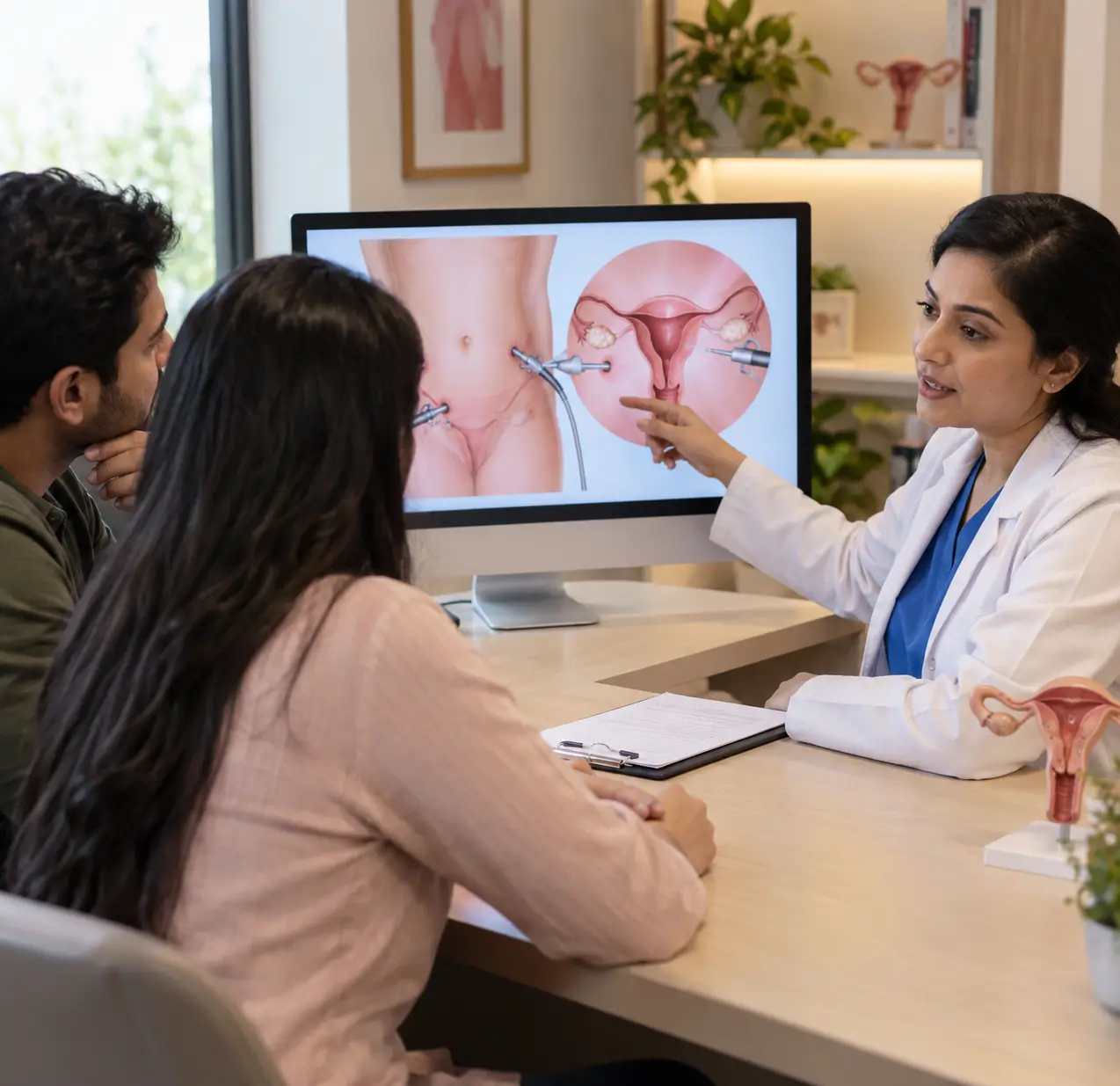

Laparoscopic Surgery for Selected Gynaecological Cancers

Laparoscopic surgery is a minimally invasive surgical technique that uses a camera and specialised instruments inserted through small incisions. For appropriately selected gynaecological cancers, it can allow the required cancer surgery to be performed with smaller incisions and may support less postoperative pain and faster recovery compared with open surgery.

Dr. Priya Bhati has specialist expertise in laparoscopic gynaecologic and gynae-oncology surgery. The decision to use laparoscopy depends on the cancer type, stage, tumour spread, planned procedure and the patient's overall health. In some cancers, open surgery may be more appropriate, and the safest oncological approach takes priority over the size of the incision.

What Is Laparoscopic Cancer Surgery?

Laparoscopic cancer surgery is a minimally invasive approach to performing certain cancer operations.

Instead of making one large incision across the abdomen, the surgeon makes several smaller openings. A laparoscope, which is a thin instrument with a camera and light, is inserted through one of these openings. Other small instruments are placed through additional openings to allow the surgeon to perform the procedure.

The surgeon views the operating area on a monitor and performs the required surgical steps using these specialised instruments.

The approach can be used for selected gynaecological cancer operations, particularly when the disease and planned surgery make minimally invasive treatment appropriate.

However, laparoscopic surgery is not simply a smaller version of open surgery. Cancer surgery has to achieve the necessary oncological objectives, including removal of the tumour and appropriate staging or lymph node assessment when required.

The surgical route is therefore chosen after considering the individual cancer rather than based only on the desire for smaller incisions.


Why Is Laparoscopic Surgery Considered for Cancer?

The main reason to consider laparoscopy is that it can allow certain cancer operations to be performed through smaller incisions.

For appropriately selected patients, minimally invasive surgery may offer advantages such as:

  • Smaller abdominal incisions
  • Less postoperative pain
  • Less disruption to the abdominal wall
  • Shorter hospital stay in many procedures
  • Earlier return to normal activities
  • Smaller scars
  • Reduced recovery time compared with some open procedures

The exact benefits depend on the operation, cancer type, patient's health and surgical complexity.

Importantly, these potential recovery benefits do not mean that laparoscopy is suitable for every cancer patient.

The priority in cancer surgery is to remove or treat the disease appropriately. If an open operation is required to achieve that safely, an open approach may be recommended.


Which Gynaecological Cancers Can Be Treated Laparoscopically?

Laparoscopic surgery can be considered for selected gynaecological cancers.

It has an established role in the surgical management of appropriately selected endometrial cancers. Current NCI information notes that minimally invasive laparoscopic surgery is standard for many patients with early endometrial cancer, with evidence showing similar overall survival and progression-free survival compared with open surgery in appropriate settings.

Depending on the diagnosis and surgical plan, minimally invasive techniques may also be used for selected procedures involving:

  • Endometrial cancer
  • Selected ovarian tumours
  • Selected cervical cancer procedures
  • Surgical staging
  • Lymph node assessment
  • Selected recurrent or complex cases

The suitability of laparoscopy varies considerably between these cancers.

A consultation is therefore important before assuming that a particular cancer can be treated laparoscopically.


Laparoscopic Surgery for Endometrial Cancer

Endometrial cancer is one of the gynaecological cancers in which minimally invasive surgery has an important role.

For appropriately selected early-stage disease, surgery commonly involves removal of the uterus and cervix, together with the fallopian tubes and ovaries. Depending on the risk and stage of the cancer, lymph node assessment may also be required.

NCI guidance identifies minimally invasive laparoscopic surgery as a standard approach for early endometrial cancer. The 2026 ESGO pocket guidelines also state that minimally invasive surgery is the preferred surgical approach for endometrial carcinoma, including high-risk disease, while noting circumstances in which it may not be appropriate.

This does not mean every woman with endometrial cancer will have laparoscopic surgery.

Tumour characteristics, disease spread, previous surgeries, medical conditions and other factors all need to be reviewed.

Laparoscopic Staging and Lymph Node Assessment

Cancer surgery is often about more than removing the main tumour.

Doctors may also need to determine whether cancer has reached nearby lymph nodes or other tissues. This information can influence the stage of the cancer and whether additional treatment such as chemotherapy or radiation is recommended.

Depending on the cancer, laparoscopic surgery can be used to perform staging procedures and lymph node assessment.

For endometrial cancer, sentinel lymph node mapping may be used in appropriate patients to identify the first lymph nodes that drain the tumour area. Amrita's Gynaecologic Oncology Division uses sentinel node mapping in the surgical management of endometrial, cervical and vulvar cancers.

The exact lymph node procedure depends on the cancer type, stage and risk features.

What About Laparoscopic Surgery for Ovarian Cancer?

Ovarian cancer requires particularly careful surgical planning.

The operation may involve removal of the ovaries and fallopian tubes, uterus, omentum, lymph nodes and visible areas of tumour depending on the extent of disease.

When ovarian cancer is advanced, surgery may involve extensive cytoreduction or debulking. Such operations can require access to multiple areas of the abdomen and may be very different from surgery for a small, localised ovarian tumour.

For this reason, laparoscopy is not automatically appropriate for every ovarian cancer patient.

In selected cases, minimally invasive surgery may have a role in assessment or treatment. In other situations, an open operation may be necessary to achieve appropriate cancer surgery.

The decision should be based on the disease pattern and the operation required, not simply on the preference for smaller incisions.

Can Cervical Cancer Be Treated With Laparoscopic Surgery?

This depends on the type and stage of cervical cancer and the specific operation being considered.

The surgical approach for cervical cancer needs particular caution. Evidence has raised concerns about minimally invasive radical hysterectomy for certain early-stage cervical cancers, and ESGO has stated that open surgery is the standard approach for radical surgery in cervical cancer.

This is an important reason not to market laparoscopic cancer surgery as suitable for every gynaecological cancer.

For a woman with cervical cancer, the specialist needs to consider the stage, tumour size, surgical procedure required and current evidence before deciding on the route of surgery.

In some situations, laparoscopic techniques may still have a role in selected procedures or staging, but the appropriate approach is determined case by case.

How Is the Decision Made?

The decision to perform laparoscopic cancer surgery involves several factors.

Your doctor may consider:

Type of Cancer

Endometrial, ovarian, cervical, vulvar and vaginal cancers behave differently and require different surgical strategies.

Stage of Disease

The extent of cancer spread is one of the most important factors in determining whether minimally invasive surgery is appropriate.

Tumour Size and Location

A larger or difficult-to-access tumour may require a different surgical approach.

Planned Operation

A straightforward hysterectomy and a complex cytoreductive cancer operation are very different procedures.

Previous Surgery

Previous abdominal or pelvic operations can cause adhesions and may affect whether laparoscopic surgery is practical.

Overall Health

Heart, lung and other medical conditions may affect whether you can safely undergo laparoscopic surgery and general anaesthesia.

Surgical Expertise

Complex minimally invasive cancer surgery requires specific training and experience.

After reviewing these factors, your specialist can explain which route of surgery is appropriate and why.

Laparoscopic Surgery Does Not Mean Less Cancer Treatment

One common misunderstanding is that laparoscopic surgery is a less extensive form of cancer treatment.

That is not necessarily the case.

A laparoscopic cancer operation can include the same essential surgical objectives as an open procedure when performed in an appropriate patient.

Depending on the cancer, the operation may involve:

  • Removal of the uterus
  • Removal of the cervix
  • Removal of ovaries and fallopian tubes
  • Lymph node assessment
  • Sentinel lymph node mapping
  • Surgical staging
  • Removal of selected tumour deposits
  • Examination of the abdominal and pelvic cavity

The difference is primarily the route used to access the surgical area.

The goal remains appropriate cancer treatment.

What Happens During Laparoscopic Cancer Surgery?

The exact operation depends on your diagnosis.

Generally, the patient receives general anaesthesia before surgery begins.

Small incisions are made in the abdomen. Carbon dioxide gas may be introduced into the abdominal cavity to create working space.

The laparoscope is inserted through one incision, allowing the surgical team to view the pelvis and abdomen.

Additional instruments are introduced through other small incisions.

The surgeon then performs the planned operation.

Depending on the cancer, this may include removal of the uterus, ovaries, tubes or other tissues and assessment of lymph nodes or other areas.

The removed tissue is sent to the pathology laboratory.

The final pathology report provides important information about the cancer and helps determine whether further treatment is required.

What Is the Role of Pathology After Surgery?

Removing the tumour is only one part of cancer treatment.

The tissue removed during surgery needs to be examined by a pathologist.

The pathology report may provide information about:

  • Cancer type
  • Tumour grade
  • Depth of invasion
  • Lymphovascular invasion
  • Lymph node involvement
  • Surgical margins
  • Other features relevant to staging and treatment

These findings can help determine the final stage and whether additional treatment is recommended.

This is why cancer surgery should be planned as part of a complete treatment pathway rather than viewed as an isolated procedure.

Laparoscopic Surgery and Sentinel Lymph Node Mapping

For certain gynaecological cancers, sentinel lymph node mapping can help identify the first lymph nodes most likely to contain cancer cells.

Instead of automatically removing a large number of lymph nodes in every patient, sentinel node assessment may provide useful staging information in appropriately selected cases.

Amrita's Gynaecologic Oncology Division uses sentinel node mapping in endometrial, cervical and vulvar cancer surgery.

Whether this technique is appropriate depends on the cancer type, stage, tumour characteristics and surgical plan.

What Are the Benefits of Laparoscopic Cancer Surgery?

For suitable patients, laparoscopic surgery can offer several recovery-related advantages.

Smaller Incisions

Instead of one large abdominal incision, several small incisions are used.

Less Postoperative Pain

Smaller incisions can mean less abdominal wall trauma and may reduce postoperative discomfort.

Shorter Hospital Stay

Many minimally invasive procedures allow patients to leave hospital sooner than after comparable open operations.

Faster Return to Daily Activities

Patients may be able to resume normal activities sooner, depending on the operation and their individual recovery.

Smaller Scars

The abdominal scars are generally smaller than those from open surgery.

NCI notes that minimally invasive surgery can result in less pain, less scarring and faster recovery compared with traditional surgery, although the actual recovery varies by procedure and patient.

Are There Risks With Laparoscopic Cancer Surgery?

Yes.

Laparoscopic surgery is still major surgery, and cancer operations can carry significant risks.

Possible complications include:

  • Bleeding
  • Infection
  • Blood clots
  • Injury to the bladder
  • Injury to the bowel
  • Injury to the ureters
  • Anaesthesia-related complications
  • Formation of adhesions
  • Need to convert to open surgery

The risks depend on the operation, cancer stage, previous surgery and general health.

Your surgeon should explain the specific risks before the procedure.

Can Laparoscopic Surgery Be Converted to Open Surgery?

Yes.

In some cases, a laparoscopic procedure may need to be converted to an open operation.

This may happen if:

  • There is unexpected bleeding
  • The tumour is more extensive than expected
  • Important structures cannot be safely separated
  • Severe adhesions are present
  • Adequate cancer removal cannot be achieved laparoscopically
  • The surgeon believes open surgery is safer

Conversion is not necessarily a complication or failure.

The priority is to complete the cancer operation safely and appropriately.

What Is Recovery Like?

Recovery depends on the type and complexity of surgery.

A relatively straightforward laparoscopic procedure may have a shorter recovery period than a large open operation.

You may experience:

  • Abdominal discomfort
  • Tiredness
  • Shoulder-tip discomfort caused by the gas used during surgery
  • Mild swelling around the incision sites
  • Temporary changes in bowel function

Your surgical team will provide instructions regarding movement, wound care, diet, driving, work and physical activity.

Even though the incisions are small, you should not assume that your body has recovered fully immediately after surgery.

Cancer surgery can involve significant internal healing.

When Can I Return to Normal Activities?

The timeline varies.

Factors include:

  • The type of surgery
  • Number of organs removed
  • Lymph node procedures
  • Whether complications occurred
  • Your general health
  • Your physical activity before surgery
  • Whether further cancer treatment is planned

Some patients return to light activities relatively quickly, while more complex procedures require a longer recovery.

Your surgeon will give you individual advice rather than applying one recovery timeline to every patient.

Will I Need Chemotherapy or Radiation After Laparoscopic Surgery?

Possibly.

The need for additional treatment is determined by the cancer type, stage, pathology findings and other risk factors.

Laparoscopic surgery does not mean that chemotherapy or radiation will be unnecessary.

For example, after surgery for endometrial cancer, the pathology report may show features that require additional treatment.

Similarly, treatment of ovarian or cervical cancer may involve chemotherapy, radiation or other therapies depending on the disease.

The purpose of surgery is to manage the cancer surgically. Additional treatment is considered separately when indicated.

Can Laparoscopic Surgery Be Used for Recurrent Cancer?

Sometimes, but this is highly dependent on the location and extent of recurrence.

Recurrent pelvic cancer can involve scar tissue, bowel, bladder, ureters or other structures.

Some recurrent cancers require complex open surgery. In selected circumstances, minimally invasive surgery may be considered for a specific procedure.

A specialist needs to review imaging and previous treatment before deciding whether laparoscopy is appropriate.

Laparoscopic vs Open Cancer Surgery

Patients often want to know which is better.

There is no single answer.

The correct surgical approach depends on the cancer and the operation required.

Laparoscopic Surgery

May offer:

  • Smaller incisions
  • Less postoperative pain
  • Shorter hospital stay in many cases
  • Faster recovery for appropriately selected procedures

Open Surgery

May be required when:

  • The tumour is extensive
  • Disease has spread widely
  • A complex cytoreductive operation is needed
  • Large specimens need to be removed
  • Safe cancer removal cannot be achieved through minimally invasive access

For endometrial cancer, minimally invasive surgery has strong evidence and is widely used in appropriate patients. For other cancers, the situation can be very different.

The question should therefore not simply be, “Can I have laparoscopic surgery?”

A more useful question is, “Which surgical approach is safest and most appropriate for my cancer?”

Laparoscopic or Robotic Surgery?

Both are minimally invasive approaches, but they are not the same.

Traditional laparoscopy uses long surgical instruments controlled directly by the surgeon.

Robotic-assisted surgery uses a robotic surgical system controlled by the surgeon from a console.

The choice between laparoscopy, robotic surgery and open surgery depends on the procedure, disease characteristics, surgeon expertise and available technology.

Amrita Hospital's Gynaecologic Oncology Division offers open, laparoscopic and robotic surgical approaches, with the route selected according to the cancer and extent of tumour spread.

Dr. Priya Bhati is trained in both laparoscopic gynaecologic oncology surgery and robotic-assisted gynaecologic cancer surgery.

Why Specialist Expertise Matters in Laparoscopic Cancer Surgery

Laparoscopic surgery requires more than familiarity with a camera and surgical instruments.

Cancer surgery involves understanding:

  • Tumour biology
  • Cancer staging
  • Surgical anatomy
  • Lymphatic drainage
  • Surgical margins
  • Appropriate lymph node assessment
  • When minimally invasive surgery is suitable
  • When open surgery is safer
  • How surgery fits into chemotherapy and radiation treatment

A gynaecologic oncologist is specifically trained to manage cancers affecting the female reproductive system.

This becomes particularly important when surgery is complex or when the diagnosis requires a combination of surgical and non-surgical treatments.

Multidisciplinary Cancer Care in Kochi

Cancer treatment is rarely limited to one doctor or one procedure.

At Amrita Hospital's Gynaecologic Oncology Division, cancer cases are discussed through a multidisciplinary tumour board involving specialists including medical oncologists, radiation oncologists, radiologists and pathologists.

This can be particularly valuable when the treatment plan involves several stages.

For example, a patient may need:

  1. Imaging and biopsy
  2. Cancer staging
  3. Surgical planning
  4. Laparoscopic or open surgery
  5. Pathology review
  6. Chemotherapy or radiation when indicated
  7. Follow-up and surveillance

The surgical approach is considered as part of this larger treatment plan.

Laparoscopic Cancer Surgery in Kochi With Dr. Priya Bhati

Dr. Priya Bhati is an Associate Professor in Gynaecologic Oncology at Amrita Hospital, Kochi.

She completed her MCh in Gynaecologic Oncology at Christian Medical College, Vellore, after completing her MD in Obstetrics and Gynaecology at Goa Medical College and working as a Senior Resident at PGIMER Chandigarh. She joined the Gynaecologic Oncology department at Amrita Hospital in 2021.

Her listed areas of expertise include all gynaecologic cancer surgeries, laparoscopic gynaecologic and gynae-oncology surgeries, robotic-assisted gynaecologic cancer and benign surgery, complex benign gynaecological surgery, preventive gynaecologic oncology and CRS/HIPEC.

For women considering laparoscopic cancer surgery in Kochi, the consultation should focus on whether minimally invasive surgery is appropriate for the specific diagnosis rather than assuming it is the preferred option in every case.

What to Bring to Your Consultation

If you have already been diagnosed with cancer, bring your medical records to the consultation.

Useful documents include:

  • Biopsy or histopathology report
  • Previous scan reports
  • CT or MRI images
  • PET-CT report, if performed
  • Blood test reports
  • Previous operation notes
  • Discharge summaries
  • Previous chemotherapy or radiation records
  • Current medication list
  • Previous surgical records

If you have received a second opinion elsewhere, bring that information as well.

Having the complete medical picture helps the specialist assess the cancer and discuss the available surgical approaches.

Questions to Ask Before Laparoscopic Cancer Surgery

Before agreeing to surgery, it is reasonable to ask:

  • What type and stage of cancer do I have?
  • Why is surgery recommended?
  • Can my cancer be treated laparoscopically?
  • Why is laparoscopy appropriate in my case?
  • Would open surgery be safer?
  • Will lymph nodes need to be assessed?
  • Will my ovaries or uterus need to be removed?
  • Could the operation need to be converted to open surgery?
  • What are the main risks?
  • How long might recovery take?
  • Will I need chemotherapy or radiation after surgery?
  • Will this treatment affect fertility?
  • What will happen after the pathology report is available?

A specialist consultation should give you clear answers before you make a decision about surgery.

When Should You Consider a Consultation?

You may benefit from a gynaecologic oncology consultation if:

  • You have been diagnosed with endometrial cancer
  • You have an ovarian tumour that may require cancer surgery
  • You have been diagnosed with cervical cancer
  • Your biopsy suggests a gynaecological malignancy
  • Your doctor has recommended cancer surgery
  • You have been offered laparoscopic surgery and want another opinion
  • You want to understand whether open, laparoscopic or robotic surgery is appropriate
  • You have already had cancer treatment and now have suspected recurrence

The earlier the surgical plan is discussed, the easier it can be to understand what the procedure is intended to achieve and what other treatment may be required.

FAQs

1. What is laparoscopic cancer surgery?

Laparoscopic cancer surgery is a minimally invasive operation performed through small abdominal incisions using a camera and specialised surgical instruments. It can be used for selected gynaecological cancers when clinically appropriate.

2. Is laparoscopic cancer surgery safe?

Laparoscopic surgery can be safe and effective for appropriately selected cancer patients when performed by an appropriately trained surgical team. Whether it is suitable depends on the cancer type, stage and planned operation.

3. Which gynaecological cancers can be treated laparoscopically?

Laparoscopy has an established role in selected endometrial cancers and may be considered for other gynaecological cancers or procedures depending on the disease. The suitability varies significantly by cancer type and stage.

4. Is laparoscopic surgery suitable for endometrial cancer?

Yes. Minimally invasive surgery is widely used for appropriately selected endometrial cancer patients. Current guidance supports minimally invasive surgery as the preferred approach in many cases.

5. Can ovarian cancer be treated with laparoscopic surgery?

Some selected ovarian cancer cases may be suitable for minimally invasive surgery, but advanced ovarian cancer often requires extensive cytoreductive surgery. The appropriate route depends on the extent of disease and the operation required.

6. Can cervical cancer be treated with laparoscopic surgery?

The answer depends on the cancer and procedure. Minimally invasive radical hysterectomy is not routinely preferred for cervical cancer, and ESGO recommends open surgery as the standard approach for radical surgery.

7. What are the benefits of laparoscopic cancer surgery?

Potential benefits include smaller incisions, less postoperative pain, shorter hospitalisation and faster recovery for appropriately selected procedures.

8. Does laparoscopic surgery remove less cancer?

Not necessarily. When appropriately selected and performed for the right procedure, laparoscopic surgery can achieve the required cancer treatment while using a minimally invasive route.

9. Will I need chemotherapy after laparoscopic cancer surgery?

Possibly. The need for chemotherapy depends on the cancer type, stage and pathology results. The surgical approach itself does not determine whether chemotherapy is required.

10. Will I need radiation after laparoscopic cancer surgery?

Radiation may be recommended for some patients depending on the cancer type, stage and pathology findings. Your treatment team will make this decision after reviewing the complete diagnosis.

11. Can laparoscopic surgery be converted to open surgery?

Yes. If the surgeon cannot safely complete the cancer operation laparoscopically or finds more extensive disease than expected, conversion to open surgery may be necessary.

12. Does laparoscopic surgery leave scars?

Yes, but the incisions are generally much smaller than the single larger incision used for many open abdominal operations.

13. How long does recovery take after laparoscopic cancer surgery?

Recovery varies according to the type and complexity of the operation. A straightforward minimally invasive procedure may allow a quicker recovery than a comparable open operation, but complex cancer surgery can still require substantial healing time.

14. Is laparoscopic surgery less painful than open surgery?

Minimally invasive surgery often causes less postoperative pain because it involves smaller incisions and less abdominal wall disruption. Individual recovery varies.

15. Can laparoscopic surgery be used for lymph node removal?

Yes. Laparoscopic surgery can be used for lymph node assessment or removal in selected gynaecological cancer operations. Sentinel lymph node mapping is also used for selected endometrial, cervical and vulvar cancers at Amrita Hospital.

16. Is laparoscopic surgery better than open surgery?

There is no single approach that is better for every cancer patient. The appropriate route depends on the cancer, tumour spread and operation required. In some situations laparoscopy is suitable, while in others open surgery is necessary.

17. What is the difference between laparoscopic and robotic cancer surgery?

Both are minimally invasive approaches. Traditional laparoscopy uses instruments controlled directly by the surgeon, while robotic surgery uses a robotic surgical system controlled by the surgeon. The choice depends on the procedure and patient.

18. Can I get a second opinion before cancer surgery?

Yes. A second opinion can help you understand the diagnosis, surgical options and whether laparoscopic, robotic or open surgery is appropriate for your case.

19. Does laparoscopic cancer surgery preserve fertility?

Fertility preservation depends on the cancer type, stage and treatment required. The fact that surgery is laparoscopic does not automatically mean fertility can be preserved.

20. What should I bring to a laparoscopic cancer surgery consultation?

Bring your biopsy report, scans, pathology reports, previous treatment records, operation notes and current medication list. Having complete records helps the specialist assess your diagnosis and surgical options.

21. Who performs laparoscopic cancer surgery in Kochi?

Dr. Priya Bhati is an Associate Professor in Gynaecologic Oncology at Amrita Hospital, Kochi, and lists laparoscopic gynaecologic and gynae-oncology surgeries among her areas of expertise.

22. Where can I consult a laparoscopic cancer surgeon in Kochi?

You can consult Dr. Priya Bhati at Amrita Hospital, Kochi, for specialist assessment of gynaecological cancers and discussion of whether laparoscopic surgery is appropriate for your condition.

Specialised Cancer Care

Best Gynae Cancer Surgeon in Ernakulam

Get specialist evaluation and treatment planning for ovarian, cervical, uterine, vaginal and vulvar cancers, with surgical options tailored to your diagnosis and individual needs.
Gynae Oncologist

Meet Your Gynaecologic Oncology Specialist in Kochi - Dr. Priya Bhati

Dr. Priya Bhati

MBBS, M. Ch. (Gynaecologic Oncology), MD (Obs & Gynae)
Senior Consultant - Gynae Oncologist and Robotic Surgeon, Department of Gynecologic Oncology, Amrita Institute of Medical Sciences, Kochi, Kerala

Dr. Priya Bhati is a Senior Consultant Gynae Oncologist and Robotic Surgeon at Amrita Institute of Medical Sciences, Kochi. She specialises in the treatment of gynaecological cancers and complex gynaecological conditions, with expertise in cancer surgery, robotic-assisted surgery and laparoscopic surgery. With years of experience at leading institutions such as CMC Vellore and PGIMER Chandigarh, she brings extensive surgical experience along with a caring and patient-focused approach.

Dr. Priya has completed her M.B.B.S. from Kasturba Medical College, Mangalore, M.D. in Obstetrics & Gynecology from Goa Medical College, and M.Ch. in Gynaecologic Oncology from Christian Medical College, Vellore. She treats women with different types of gynaecological cancers and also performs complex benign gynaecological surgeries and advanced procedures such as CRS and HIPEC.

She believes that every patient deserves to understand her condition and treatment clearly. Along with treating gynaecological cancers, Dr. Priya also focuses on prevention and early detection, including HPV vaccination and preventive gynaecologic care. Her goal is to provide personalised treatment while making patients and their families feel informed, comfortable and supported throughout their care.

Memberships
  • Association of Gynaecologic Oncologists of India (AGOI)
  • Association of Gynaecologic Robotic Surgeons (AGRS)
  • Society of European Robotic Gynaecological Surgery (SERGS)
  • KLSC (Kerala State Chapter AGOI)
Feedback
Reviews

Patients Testimonial

I was very scared when I came to know about my cancer. Dr. Priya Bhati explained everything clearly and told me what we should do next. I am really thankful for her support.

Anitha

Cancer Patient

Dr. Bhati is very patient and listens to all your doubts. She explained my reports in simple words and did not make me feel rushed. I felt much better after talking to her.

Sheeba

Cancer Patient

We met Dr. Priya Bhati for my mother’s treatment. She explained the surgery properly and answered all our questions. We felt that she really understood our concerns.

Reshma

Cancer Patient

I was worried about having surgery, but Dr. Bhati explained the procedure and what to expect. She was very calm and supportive. I am happy that we consulted her.

Deepa

Cancer Patient

Dr. Bhati gave us enough time during the consultation and explained the treatment options clearly. She also listened to what we wanted to know. Very good doctor and a very positive experience.

Mini

Cancer Patient

After my diagnosis, I was confused about what to do next. Dr. Bhati went through my reports and explained everything step by step. Her guidance gave me confidence to start my treatment.

Neethu

Cancer Patient

Latest Blog

Book An Appointment